
The sealant joints on your brick property are more than just a finishing touch; they are a critical line of defense. This flexible brick caulking is designed to protect your building’s envelope from its most persistent enemy: water. But what happens when this frontline defense begins to fail? Often, the signs are subtle and easy to overlook. This article will guide you through the warning signs of failing caulking, explaining why it breaks down and what you can do to prevent minor issues from becoming major structural problems. Recognizing these early indicators is key to protecting your investment and preserving the integrity of your masonry.
Why Aging Caulking Leads to Water Damage
Think of sealant as the flexible gasket that protects the vulnerable joints in your building’s exterior. It is the primary barrier preventing rain, snow, and condensation from seeping into the wall assembly. However, most sealant failures do not happen overnight in a dramatic fashion. Instead, they occur gradually and often go unnoticed by the untrained eye.
The real danger lies in how effectively even a tiny gap can channel moisture. A small split or a slight separation that seems insignificant can allow a surprising volume of water to penetrate the wall cavity during a rainstorm. This slow, steady intrusion is what leads to hidden, long-term damage. The goal for any property owner should be to recognize these early warning signs before water has a chance to compromise insulation, rot structural components, or damage interior finishes.
How Caulking Breaks Down Over Time
Sealant is a resilient material, but it is not permanent. It is constantly under assault from various forces that contribute to its eventual breakdown. Understanding these factors can help you know where and when to look for signs of failure.
Weather Exposure
Your building's exterior is relentlessly exposed to the elements. UV radiation from the sun degrades the chemical composition of the sealant, causing it to become brittle and weak. Furthermore, daily and seasonal temperature swings force the building materials to expand and contract. The sealant in the joints must stretch and compress to accommodate this movement. Over thousands of cycles, this constant stress wears the material out, leading to fatigue and failure.
Material Aging
Just like any other material, sealants have a finite service life. As they age, their essential properties begin to degrade. The most important of these is elasticity — the ability to stretch and return to its original shape. Older caulking loses this flexibility and becomes hard. This hardening process also leads to adhesion failure, where the sealant loses its bond with the adjacent brick or window frame, creating a direct path for water.
Building Movement
A building is not a static object. The foundation settles, and different materials respond to environmental changes in different ways. Brick masonry and wood or steel framing expand and contract at dissimilar rates. The sealant joints are specifically designed to absorb this differential movement. However, if the movement is more significant than the sealant was designed to handle, or if the sealant has aged and lost its elasticity, it can be stretched beyond its capacity, causing it to tear or pull away completely.
Visible Exterior Warning Signs
The best time to catch failing caulking is before it causes interior damage. A careful visual inspection of your building’s exterior can reveal several tell-tale signs of sealant degradation.
Shrinking and Pulling Away
One of the most common signs is when the sealant bead begins to shrink. You may notice it receding from the edges of the joint, creating a concave or hollowed-out appearance. This shrinkage often results in the sealant pulling away from one or both sides of the joint, leaving a fine but definite gap along the edge.
Cracking and Splitting
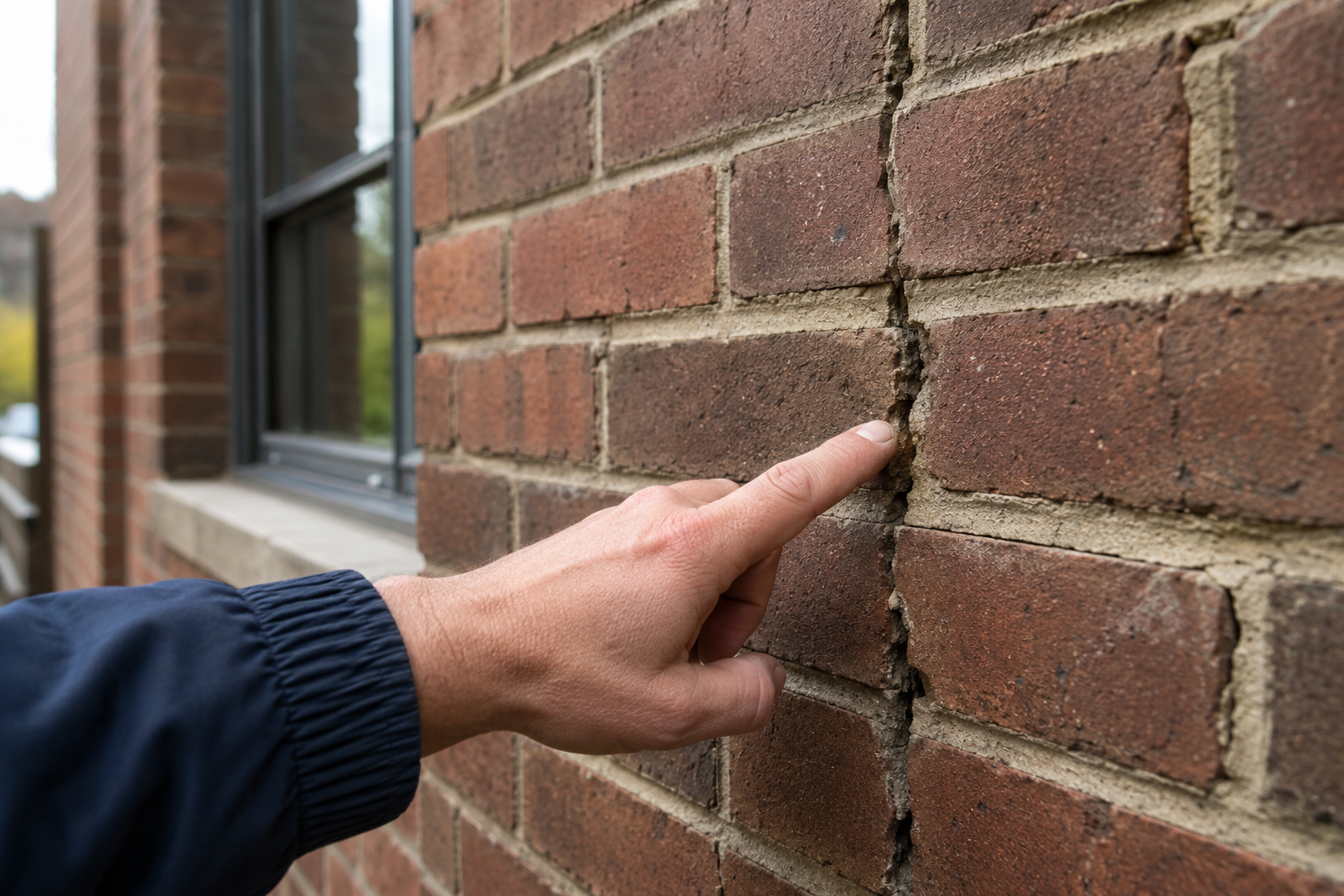
As sealant becomes hard and brittle with age, it can no longer flex with the building's movement. This leads to visible fractures. You might see small, web-like surface cracks across the face of the sealant bead, or you might find complete splits that run the entire length of the joint line, effectively breaking the seal.
Separation from Masonry
This is a critical stage of failure. Look for areas where the caulking has visibly detached from the brick, mortar, or window frame. In these spots, you can often see a clear air gap between the sealant and the masonry surface. This indicates a complete loss of adhesion and means the joint is no longer watertight.
Discoloration and Hardening
Aesthetic changes can also signal a problem. Sealant that has become faded, chalky, or discolored is showing signs of UV degradation and material breakdown. If you were to touch it, you would find it feels hard and brittle rather than soft and flexible. This change in texture is a clear indicator that the sealant has lost its protective qualities.
Hidden Interior Indicators
Sometimes, the first clues of failing caulking appear inside your home or building. These are urgent signs that water has already breached the exterior and is causing damage within the wall system. Be on the lookout for:
Damp Drywall
Areas of drywall near windows, doors, or exterior corners that feel damp or soft to the touch.
Musty Odors
A persistent musty or mildew smell, especially after it rains, can indicate moisture trapped within the walls.
Peeling Paint
Bubbling or peeling paint on interior walls or ceilings, particularly around window frames, is a classic sign of water intrusion.
Window or Door Drafts
While drafts can have many causes, a noticeable increase can sometimes be traced back to failed sealant joints around the opening.
Minor Staining
Faint, discolored stains that appear on walls or ceilings after heavy rain are a direct signal of a leak.
High-Risk Areas That Fail First
Certain areas of a building are under more stress and are therefore more susceptible to premature sealant failure. When performing an inspection, pay special attention to these high-risk zones:
Windows and Doors
The joints around frames experience significant movement and direct weather exposure.
Chimney Flashing Joints
The intersection between the chimney masonry and the roof is a common point of failure.
Roof-to-Wall Transitions
Where a roofline meets a vertical brick wall, the joint is exposed to heavy water runoff.
Utility Penetrations
Any place where pipes, vents, or conduits pass through a brick wall.
Expansion Joints
These are specifically designed to absorb building movement and are under constant stress.
What Happens If Re-Sealing Is Delayed
Ignoring the signs of failing caulking can lead to a cascade of expensive and complex problems. Once moisture finds a way into the wall cavity, it can saturate insulation, drastically reducing its R-value and effectiveness. This persistent dampness creates the perfect environment for mold and mildew to develop, posing health risks and requiring extensive remediation. Over time, the moisture will also attack the masonry itself, leading to spalling (flaking), efflorescence (salty deposits), and freeze-thaw damage that can destroy the brick and mortar.
When Professional Re-Sealing Is Needed
While a small, accessible caulking repair might be a DIY task, widespread or systemic failure requires a professional. You should call an expert when you observe:
Multiple failing joints across several areas of the building.
Repeated interior leaks that persist despite previous repair attempts.
Failing sealant in hard-to-access elevations that require specialized lifts or scaffolding.
An older building where the original sealant is reaching the end of its expected service life across the entire structure.
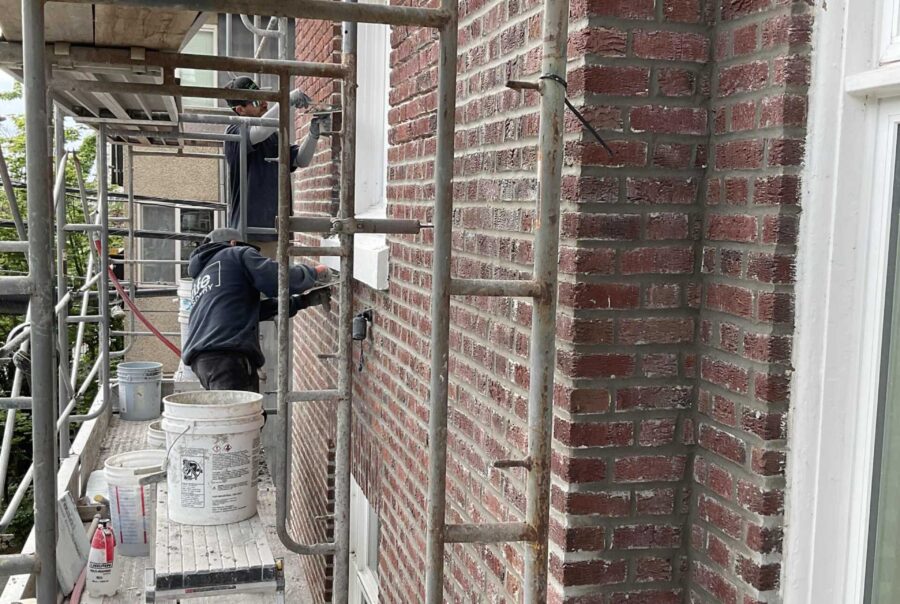
Professionals have the expertise to properly remove the old sealant, prepare the joint surface, and install the correct type of high-performance sealant for a durable, long-lasting, and watertight repair.
Conclusion
The failure of something as simple as caulking often appears subtle at first glance. A small crack or a minor gap can seem harmless. However, these small openings are invitations for water intrusion that can lead to significant and costly repairs down the road. By conducting routine inspections of your building’s exterior and learning to spot the early warning signs, you can protect your property’s structural integrity. Timely re-sealing is not just a maintenance task; it is a critical investment that prevents major damage and extends the life of your masonry for decades to come.
Brick Caulking FAQs
How often should exterior brick caulking be replaced?
Most exterior sealants last about 7–20 years, depending on the material and sun exposure. Commercial buildings in wet climates often need inspection every year and replacement sooner if movement or moisture exposure is high.
Can bad caulking cause leaks inside the building even if the brick looks fine?
Yes. Water usually enters around joints, windows, and penetrations, not through solid brick. Failed sealant often causes interior staining, musty odors, or wet drywall before exterior damage is obvious.
Is cracked caulking an emergency or normal aging?
Hairline surface cracks can be normal aging, but gaps, separation from the wall, or recurring moisture stains mean the seal has failed and should be repaired quickly to prevent hidden structural damage.
Why does caulking keep failing in the same spot every year?
Recurring failure usually indicates movement between materials, improper installation, or the wrong sealant type. The joint often needs professional prep and a flexible high-performance sealant rather than simple re-application.
What happens if you ignore failing sealant around the brick?
Water enters the wall cavity, damaging insulation, causing mold growth, and eventually leading to brick spalling and interior repairs. Small joint repairs are inexpensive compared to the structural damage that delayed resealing can cause.
Know When It’s Time to Re-Seal Your Brick
Protecting your property’s building envelope is essential for its longevity and value. A crucial part of this is understanding the role of professional sealant application and masonry care. To discover how expert services can safeguard your historic or modern structure, we invite you to learn more about our comprehensive masonry and sealant services.