

Full-Service Brick Laying and Repair Work
Masonry repair on a commercial building starts with finding what is failing. A cracked brick, a recessed mortar joint, and a bulging wall section are three different problems, and each needs a different fix. We diagnose first, then repair with materials that work with the existing wall.
Mortar compatibility is where many repairs go wrong. Older commercial buildings were usually built with soft, lime-based mortar. Patching them with hard Portland cement mortar traps moisture and damages the brick face. We check the original mortar before specifying a repair mix on every job.
Commercial Masonry Repair in Seattle
Seattle is hard on masonry. Steady rain, freeze-thaw cycles, and a large stock of pre-1980 brick buildings mean most older facades will need repair work at some point. Water infiltration drives most of it: spalling brick, failed mortar joints, and structural movement all trace back to moisture getting into the wall.
Damage moves in stages. It starts as hairline deterioration, becomes active moisture intrusion, then structural movement, and finally major failure. Catching it at the first stage costs far less than repairing it at the third or fourth. That is the practical reason to repair masonry early instead of waiting for a tenant complaint.
We handle masonry repairs across every common commercial material:
- Brick crack repair, spall repair, and unit replacement
- Concrete block crack repair and joint repair
- Stone repair of stone units and trim
- Mortar joint repair, repointing, and full tuckpointing programs
For property managers, planned repair is also a budgeting tool. A prioritized list of what needs work now and what can wait lets you plan capital spending instead of reacting to emergencies.
Types of Masonry Repair We Handle
Mortar Joint Repair and Repointing
Mortar is the sacrificial portion of a masonry wall. It absorbs stress and wears away over time so the brick does not have to. When joints look recessed, gapped, or sandy to the touch, we cut out the failed mortar and replace it with a compatible mix. When most of a facade’s joints have failed, commercial tuckpointing renews them across the whole wall in one planned project.
Brick Replacement and Matching
Cracked, spalled, or broken bricks are cut out and replaced one unit at a time. We match the replacement to the original in color, texture, size, and firing characteristics so the repair does not stand out on the facade. This is brick masonry repair work that disappears into the wall.
Structural Crack Repair
Significant cracks need more than new mortar. The repair of cracked masonry at this level is about stopping movement. Structural masonry repair can involve hidden pins, staples, or other reinforcement to stop the wall from moving further. When cracking points to a larger failure, such as settlement or separation, we coordinate with structural engineers and fold the work into a building restoration scope.
Wall Stabilization
A bulging or leaning wall section usually means the wall has pulled away from its backing or the original ties have failed. Stabilization often requires partial or complete rebuilding of the affected section. We assess the extent of movement on site before recommending a fix, since the right masonry wall repair depends on how the wall connects to the structure.
Lintel and Sill Repair
Lintels carry masonry over window and door openings, and failed steel lintels are a common problem on older commercial buildings. Sills shed water away from those same openings. We repair or replace failing lintels and sills and rebuild the surrounding brick so the opening is sound and watertight.
Seattle Brick Laying Services
Commercial brick laying depends on consistent coursing, tight joints, and the right brick and mortar for each building. Our union-trained masons let us staff large and small commercial jobs with the same standard of work.
Our bricklaying services cover new brick construction, additions, and facade replacement on commercial buildings in Seattle, Bothell, Bellevue, Redmond, Everett, and across Puget Sound. On multi-building portfolios, you get consistent crews and consistent results from one property to the next.
Seattle Brick Repair Services
Brick is durable, but decades of rain and weather will find the weak points. Brick repair in Seattle begins with the right diagnosis. A crack through a brick and a crack through a mortar joint have different causes and need different repairs. Treat one like the other and the repair fails.
Spalling is one of the most common problems we see. Water gets into the brick, freezes, expands, and breaks the face away. Left alone, spalling spreads across a facade. We remove the damaged units, correct the moisture path where we can, and set matching bricks, then lay out the maintenance steps that keep a brick building sound so the damage does not return.
What Our Repair Services Include
- Evaluating the condition of mortar and brick
- Mortar joint repair and repointing
- Brick replacement with matched units
- Crack repair and stabilization
- Efflorescence removal
- Terracotta stone repairs
- Concrete injection work
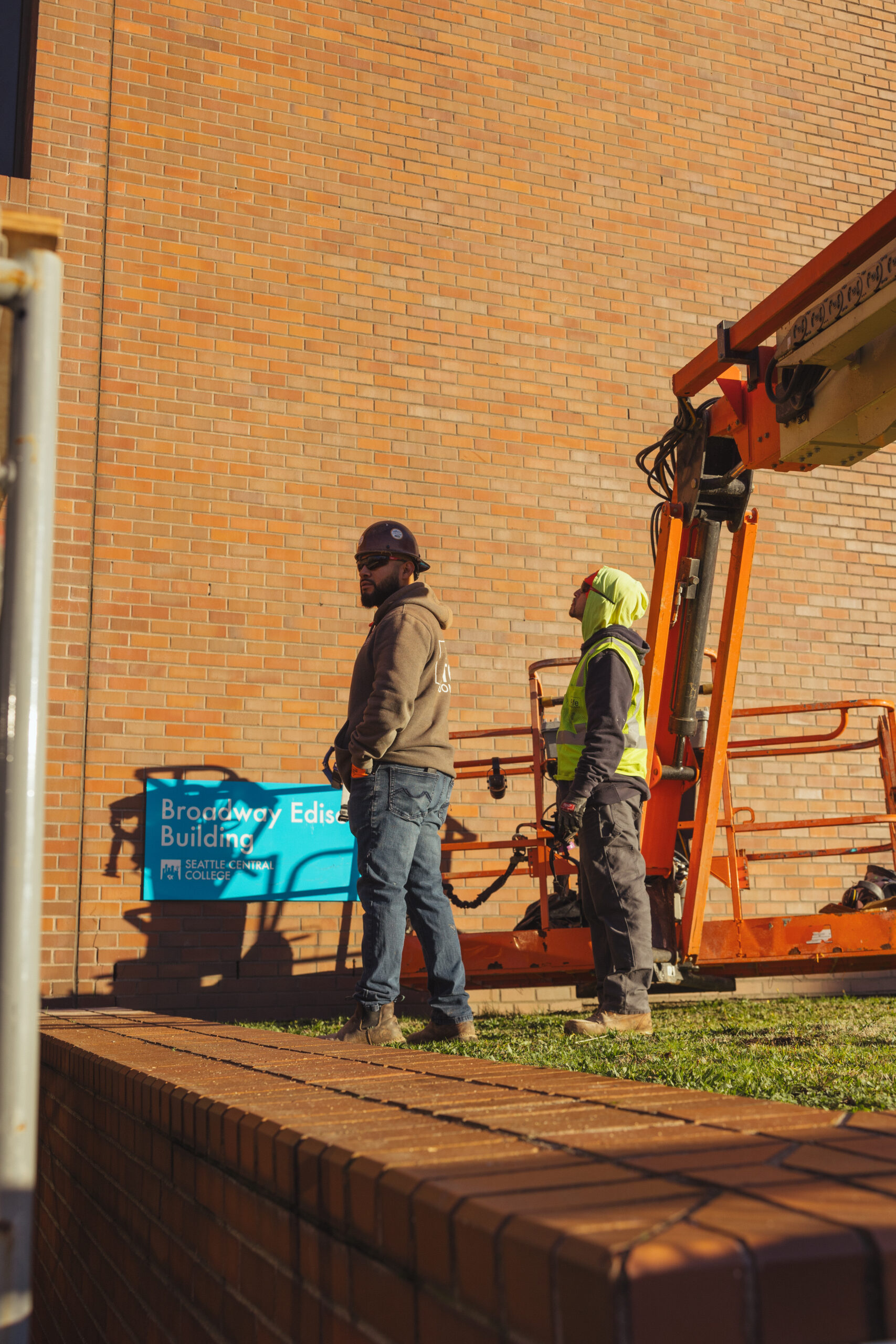
Ongoing Masonry Maintenance for Commercial Buildings
Reactive repair is the most expensive way to manage a masonry portfolio. Brick maintenance on a schedule catches failing joints and early cracks before water reaches the interior, while the fix is still small.
Our proactive building inspections give you a prioritized repair report with photographs and budget estimates. Findings are sorted by urgency, so you can see what needs attention this quarter and what can go into next year's capital plan. It also gives you the documentation to justify spending to building owners, boards, and finance teams.
Our maintenance programs cover brick, block, stone, and terra cotta. A typical brick wall maintenance program includes:
- Scheduled inspection of facades, joints, and openings
- Joint repair before water gets behind the brick
- Crack monitoring and early repair
- Photo documentation that builds a condition history for each building
Masonry maintenance is one part of keeping a building dry. Our building envelope repairs cover related moisture work, and our masonry services for property managers keep inspection, repair, and reporting on one schedule across a portfolio.
Our Brick Laying Work in Seattle
Explore our craftsmanship in action! At Rife Masonry, we take pride in delivering high-quality brickwork around Seattle that stands the test of time. From schools and churches to large commercial buildings, our projects showcase the skill, precision, and attention to detail that define our work.


Seattle’s Trusted Brick Experts
Why Choose Rife Masonry?
Union-Trained Crews
Our masons have formal trade training. You can trust them with complex work across several buildings without constant supervision. Seattle property manager Phil Nyberg put it this way: "Chad's guys are craftsmen, something unusual in today's market."
Commercial Buildings Only
We work for commercial property managers and building owners, no one else. Our scheduling, documentation, and site coordination are built around occupied commercial buildings and multi-property portfolios.
Repairs That Match
We match brick and mortar to the original wall, so repairs blend in and the new material does not damage the old.
Documented Restoration Work
Our restoration work starts with diagnosis. In our Sprunk House restoration, on a historic terra cotta facade on Queen Anne Hill, we traced cracking corners to rigid grout and non-breathable paint from earlier repairs. After a diagnosis with engineer Becky Wong of WJE, we reinforced the failing units from within using stainless steel all-thread and repaired them with patching material compatible with historic masonry. For a property manager, that means the repair fixes why the wall failed, so you are not paying to fix the same wall twice.
Licensed & Insured
We prioritize safety. Our contractors are fully licensed and insured, so your building and tenants are not carrying the risk of an uninsured crew.


Schedule Your Masonry Repair or Brick Laying Service Today
Ready to get started on your building? Whether you need new brickwork or masonry repair, our team at Rife Masonry will assess what you are seeing, explain what needs repair now and what can wait, and give you a free estimate. We schedule the work at a convenient time for your building and tenants, and we build it with precision and care to last for years. Call (206) 696-6998 or request a quote online.
Frequently Asked Questions About Masonry Repair
What is the difference between masonry repair and restoration?
The difference between masonry repair and restoration is scope. Repair fixes specific, localized damage, such as a failed joint, a cracked brick, or a spalled section, while restoration returns a building’s masonry to its original condition across a larger area and often involves structural assessment and engineers.
How do I know if my building needs masonry repair?
Look for cracked bricks or failing mortar joints, white chalky deposits on the surface, bricks that are loose or bowing outward, and damp patches on interior walls. Any of these means water is getting into the wall, and where the crack runs tells you whether the brick or the mortar needs repair.
How much does commercial masonry repair cost?
Cost depends on the type and extent of damage, the materials needed to match the existing brick and mortar, access to the work area, and whether engineering is required. Damage caught early costs less to fix than damage that has reached structural movement. A site assessment is the only reliable way to price the work, so call (206) 696-6998 to schedule one.
Can you match our existing brick and mortar?
Yes. We evaluate the original brick for color, texture, size, and firing characteristics, and we check the original mortar composition before choosing a repair mix. The goal is a repair that blends into the wall and does not trap moisture or damage the original brick.
How long does masonry repair take on an occupied building?
Localized joint work or brick replacement on an accessible facade is the quickest kind of job and can often be done with little disruption to tenants. Work that needs scaffolding, staging, or engineering takes longer and needs more advance planning. We cover sequencing, access, and tenant impact during the assessment so building staff can plan around it.