A small, persistent leak in one apartment unit. A faint stain on a hallway ceiling. These seemingly minor issues might be the first warning signs of a much larger problem brewing within your building’s exterior. For property managers and owners of commercial or multi-family buildings, the building envelope is the first and most critical line of defense against the elements. When it fails, the consequences can be widespread, complex, and costly. This guide will help you identify the most common failure points before they escalate into widespread damage, protecting your investment and your tenants.
Why Envelope Failures Are More Complex in Larger Buildings
It’s tempting to think of a building’s exterior as a simple shell, but in large-scale properties, the envelope is a complex system of interconnected components. A failure here is rarely a simple fix due to several factors.
Larger buildings utilize a wide array of materials, from brick and precast concrete to metal panels and EIFS (Exterior Insulation and Finish Systems). Each transition point between these materials, such as where a brick wall meets a window frame or a roofline, creates a potential weak point for water intrusion if not detailed and sealed perfectly.
Furthermore, the greater height and surface area of commercial and multi-family properties mean they endure significantly more stress from wind, rain, sun, and thermal expansion and contraction. This constant movement and exposure accelerate the aging of sealants and materials, testing the limits of every joint and connection. Unlike a single-family home, a small defect on a large building, like a single cracked mortar joint on the tenth floor, can allow water to travel down through the wall cavity, impacting dozens of units below it before the source is even discovered.
Masonry Joint Failures
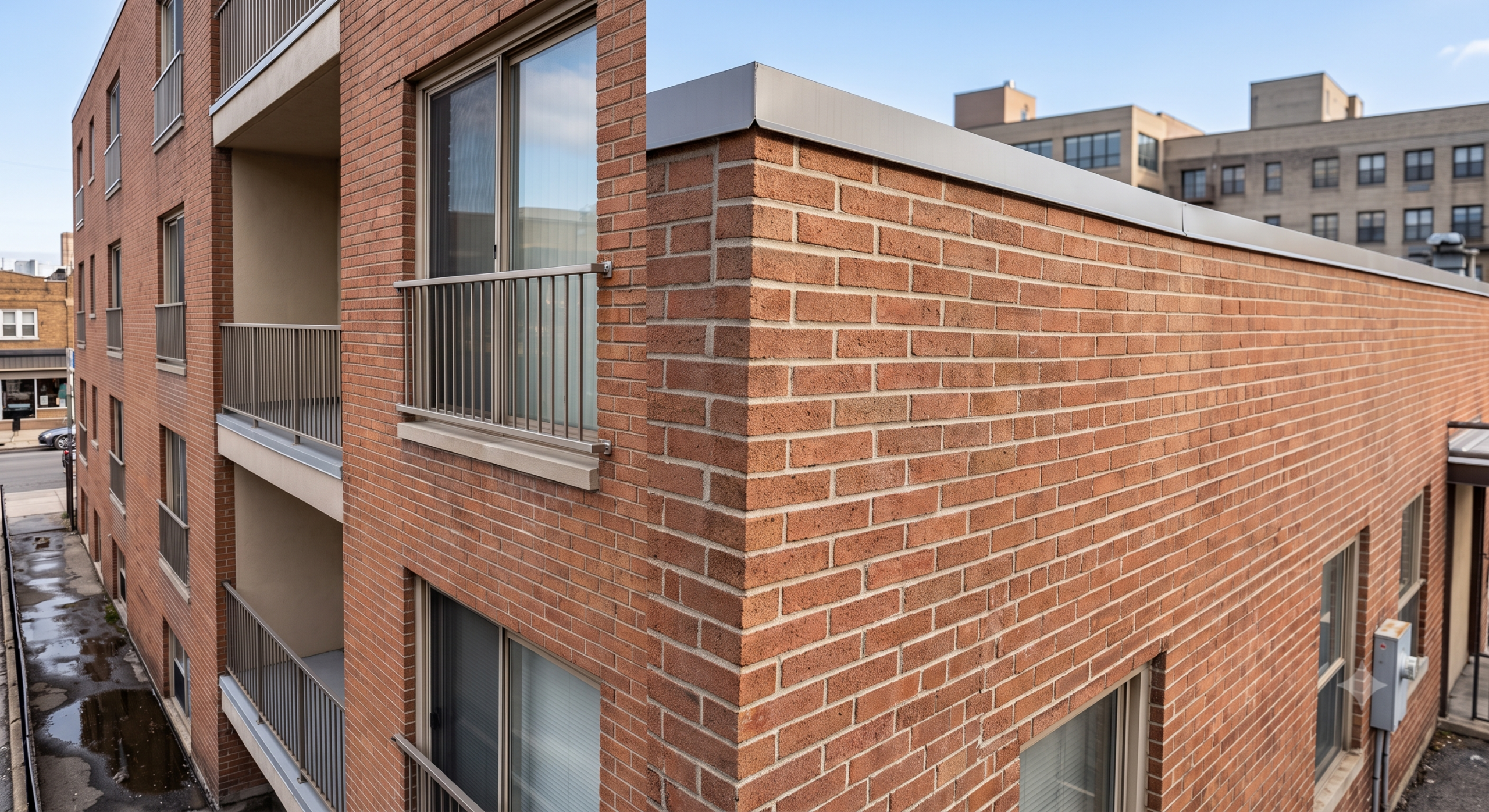
For buildings with brick, block, or stone facades, the thousands of feet of mortar joints are a primary area of concern. These joints are not just decorative; they are essential for keeping water out of the wall system.
Mortar Deterioration
Over time, exposure to weather causes mortar to break down. Are you seeing joints where the mortar appears to be receding or crumbling? Have you noticed hairline or larger cracks forming? This is a clear signal that the mortar is losing its integrity, creating channels for moisture to penetrate the wall cavity and begin its destructive journey inward.
Improper Past Repairs
Well-intentioned but incorrect repairs can often make a problem worse. A common mistake is using a modern, high-strength mortar to patch a historic or softer brick facade. This hard mortar doesn't "breathe" or move with the original masonry, causing the surrounding brick or stone to crack and spall. Another issue is surface patching, where a new layer of mortar or sealant is simply smeared over a failing joint, which can trap water behind it and accelerate deterioration.
Resulting Problems
When masonry joints fail, the problems manifest both inside and out. Property managers may receive recurring complaints of interior leaks that seem to have no obvious source. On the exterior, you might see efflorescence, a white, chalky residue left as water evaporates from the masonry surface. In colder climates, this trapped moisture leads to devastating freeze-thaw damage, where water freezes, expands, and breaks the masonry apart from within.
Flashing and Transition Failures
Flashing is a thin, impervious material, typically metal, used to direct water away from critical areas. Failures at these transition points are one of the most frequent causes of serious building envelope leaks.
Roof-to-Wall Intersections
The joint where a roof meets a vertical wall is notoriously vulnerable. If the flashing is missing, installed incorrectly, or has pulled away from the wall, it creates a direct path for rainwater to get behind the exterior cladding. This can lead to saturated sheathing, corroded steel studs, and extensive interior water damage.
Window and Door Flashing
Every window and door opening is a potential leak point. Improper installation of flashing systems around these openings is a widespread construction defect. Even with proper installation, the sealants used to finish the perimeter joints will eventually break down from UV exposure and building movement, requiring routine inspection and maintenance to prevent water intrusion.
Parapet and Coping Areas
Parapet walls, which extend above the roofline, are exposed to weather from three sides. The coping, or cap, on top of the parapet is the primary defense. If the coping's seams fail or the flashing underneath is compromised, water can infiltrate the top of the wall assembly, saturating the masonry and leading to issues all the way down the building.
Expansion Joint Failures
Large buildings are not static; they move. Expansion joints are designed to safely absorb this movement from thermal changes, wind loads, and settlement. When they fail, the structural integrity of the facade itself is at risk.
Sealant Aging
The flexible sealant within an expansion joint is the component that does the real work. After years of exposure and movement, these sealants lose their elasticity. They can shrink, become brittle, and crack, breaking the waterproof seal they were designed to provide.
Building Movement
Sometimes, a building experiences more movement than the joint was designed to handle. This can overstress the joint, causing the sealant to pull away from the substrate or tear completely. This separation creates a significant gap in the building's armor.
Consequences
The results of a failed expansion joint are severe. You may see cracking in the surrounding walls as building stresses are no longer being properly managed. These failures also allow significant air and water leakage into the building, leading to higher energy costs and widespread interior damage.
Penetration Points
Anything that passes through your building’s exterior walls must be perfectly sealed. These penetration points are common and often overlooked sources of water intrusion.
Mechanical and Utility Openings
Think about all the necessary openings in your walls: HVAC vents, plumbing pipes, electrical conduit, and exhaust fans. Each one requires a durable, flexible seal around its perimeter. Gaps in the sealant around these fixtures provide an easy entry point for water and pests.
Balcony and Railing Attachments
Balconies and railings are often bolted directly through the building's weather barrier. If these attachment points are not properly waterproofed, water will travel down the bolts and into the wall structure. This can cause hidden corrosion of the fasteners and structural decay within the wall, compromising both safety and building integrity.
Foundation and Drainage Interfaces
Water problems don’t only start from the top. The base of your building is constantly under threat from ground and surface water. Poor site drainage can lead to saturated soil at the building’s perimeter. This constant moisture wicks up into the lower walls, causing paint to peel, masonry to degrade, and creating damp, unhealthy conditions in ground-floor units and common areas.
Warning Signs Property Managers Should Watch For
Being proactive is key. Train your maintenance staff and encourage tenants to report these early warning signs immediately:
- Recurring leaks in the same units, especially after rain
- Water staining or discoloration on interior walls or ceilings
- Peeling or bubbling paint, particularly near windows, ceilings, or baseboards
- Persistent musty odors or visible mold growth in multiple units
- Visible cracking, crumbling, or dark, wet-looking patches on the exterior facade
Why Early Repairs Prevent Major Restoration
Ignoring a “small” envelope issue is a recipe for financial disaster. Water that enters a wall system doesn’t stay put; it spreads through absorption and gravity. What begins as a minor mortar crack can lead to rotted structural supports, widespread mold contamination, and damage that compounds across multiple floors and units. The cost to repair a single failed joint is minimal. The cost to remediate mold and repair structural damage in twenty apartment units is astronomical. Early and correct repairs escalate from a minor maintenance expense to a major capital restoration project.
Conclusion
Ultimately, the health of a commercial or multi-family property depends on the performance of its building envelope. Most significant failures do not happen in the middle of a solid wall; they occur at the transitions, joints, and penetrations where different systems meet. By understanding these common weak points, property managers can implement routine inspections and act on early warning signs. This proactive approach is the most effective way to prevent catastrophic multi-unit damage, reduce liability, control repair costs, and protect the long-term performance and value of your building.

Building Envelope FAQs
Why do multiple apartments leak in different places during the same storm?
Water often enters at one failure point high on the building and travels inside the wall cavity. The leak appears far from the actual source, which is why multi-unit buildings often show problems in several units at once.
What is the most common building envelope failure in multi-family buildings?
Failed sealants and flashing at windows, roof-to-wall transitions, and expansion joints cause the majority of large-scale water intrusion issues in commercial and apartment properties.
How can you tell if a leak is coming from the roof or the exterior wall?
Roof leaks typically appear near ceilings on upper floors, while envelope leaks show around windows, walls, or recurring vertical patterns across multiple floors, often after wind-driven rain.
Is recurring water damage a maintenance issue or a construction defect?
Repeated leaks in the same area usually indicate a system failure, such as flashing, joint design, or material aging, rather than a one-time maintenance issue. It requires investigation, not patching.
When should a property manager schedule a full envelope inspection?
If leaks reappear after repairs, affect multiple units, or occur during heavy wind-driven rain, a comprehensive envelope assessment is necessary to locate the true entry point and prevent widespread damage.
Spot Exterior Failures Before Damage Spreads
Identifying these issues is the first step. Executing a durable, correct repair requires specialized expertise. If you’ve noticed any of the warning signs discussed here, it’s time to consult with professionals who understand the complex dynamics of commercial building envelopes.