
Your brick or stone building looks solid and impenetrable, a fortress against the elements. But its greatest vulnerability isn’t the masonry itself; it’s the thin lines of sealant that hold it all together. A single failed caulk joint can silently invite water into your property, leading to damage that is often invisible until it becomes severe. This article reveals the critical role of brick caulking in protecting your building’s envelope and explains how to prevent minor gaps from turning into major structural problems.
Why Caulking Is Critical for Masonry Protection
When you think of a water leak, you might picture a hole in the roof. However, for masonry structures, the most common points of water intrusion are at joints, transitions, and openings. The brick and mortar are designed to shed water, but they rely on flexible sealants to create a weather-resistant barrier where different materials meet. When this caulking fails, it creates a direct pathway for moisture. This can lead to hidden rot in your framing, compromised insulation, and even foundational issues. Understanding how proper sealing protects your entire building envelope is the first step toward long-term preservation.
Where Water Enters Brick Structures
Water is persistent and will find any weak point in your building’s exterior. While a solid brick wall is highly resistant, certain areas are notoriously prone to leaks if not perfectly sealed. Knowing where to look is half the battle.
Window and Door Perimeters
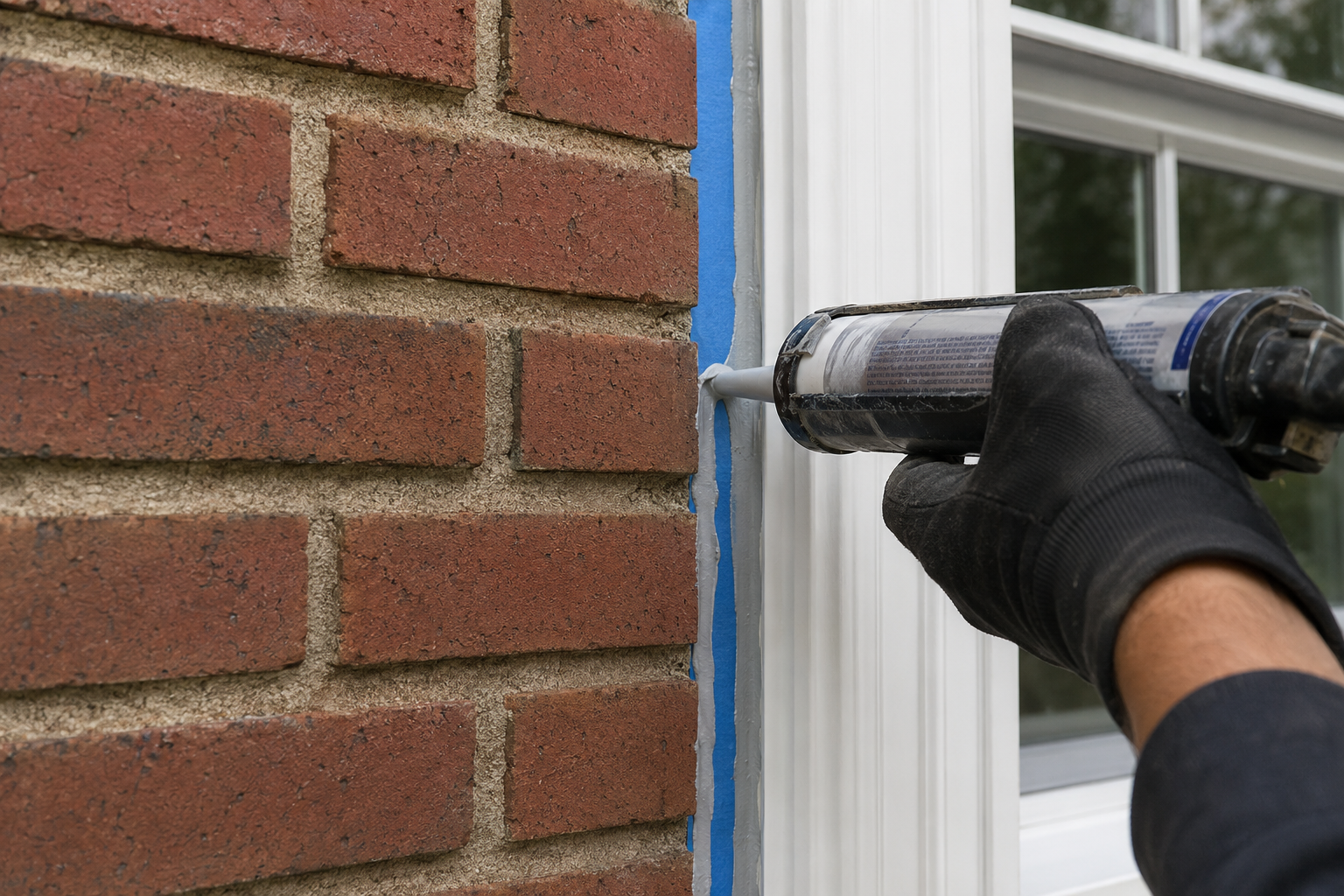
The transition between a solid masonry wall and a window or door frame is a high-stakes area. Over time, the original sealant can age, shrink, and pull away from the brick, creating subtle but destructive gaps. Even a hairline crack is enough for wind-driven rain to penetrate the wall cavity.
Roofline and Flashing Transitions
Where your roof meets a masonry wall or chimney is another critical junction. Metal flashing is designed to direct water away, but the sealant that seals the edges of that flashing is the true guardian. If the joints at a chimney or a roof-to-wall intersection fail, water can get behind the flashing and travel down the interior of your walls.
Expansion and Control Joints
Builders intentionally design expansion and control joints into large masonry walls to allow for natural movement as materials expand and contract with temperature changes. These joints are not structural flaws; they are essential for preventing cracks. However, they must be filled with a highly flexible sealant that can accommodate this movement. When that sealant becomes hard and brittle, it fails, compromising the entire system.
Utility and Penetration Points
Think of all the things that pass through your exterior walls: dryer vents, plumbing pipes, electrical conduits, and outdoor fixtures. Each one of these penetrations creates a potential entry point for water. Meticulous sealing around these openings is necessary to keep your building dry.
Signs Caulking Is Failing
How can you tell if your building’s first line of defense is compromised? The signs of failing caulking range from obvious to subtle, but all of them demand attention. Look for these red flags:
Why Caulking Fails Over Time
Sealant isn’t a “set it and forget it” material. It lives a hard life on the exterior of your building and degrades due to several factors. Understanding the cause of failure is key to choosing the right solution.
Weather Exposure
Constant exposure to the sun’s UV rays breaks down the chemical composition of sealants, making them brittle. Here in the Pacific Northwest, the cycle of wet winters and dry summers causes constant temperature swings. This forces materials to expand and contract, putting immense stress on sealant joints and accelerating their failure.
Improper Installation
A successful sealant application is more than just squeezing a tube. Using the wrong type of sealant for masonry or failing to properly clean and prepare the surface can lead to immediate failure. The joint must be free of dust, old material, and moisture for the new sealant to create a durable, lasting bond.
Movement of Materials
Different building materials react to temperature and humidity changes at different rates. The wood framing of a window expands and contracts differently from the surrounding brick wall. The sealant’s job is to bridge that gap and stretch or compress as needed. If the sealant loses its flexibility or adhesion, it will tear away, breaking the seal.
Choosing the Right Sealant Matters
Not all caulks are created equal. Selecting the correct sealant for a masonry application is a science that balances flexibility, breathability, and durability. Using the wrong product can cause more harm than good.
Flexible vs. Rigid Sealants
Masonry joints require high-performance, flexible sealants like polyurethane or silicone. These materials can stretch and compress significantly without breaking or losing adhesion. A rigid, inflexible caulk, like a basic painter's acrylic, will crack almost immediately when used in a joint that experiences movement, rendering it useless.
Breathable vs. Waterproof
Historic brick and mortar are porous materials; they need to breathe. This means they absorb small amounts of moisture and then release it back into the air as vapor. While you want to stop bulk water from entering, sealing a joint with a completely non-breathable, waterproof sealant can trap moisture inside the wall. This trapped water can cause spalling, efflorescence, and freeze-thaw damage. The right sealant keeps liquid water out while allowing water vapor to escape.
Durability Expectations
Investing in a professional-grade sealant installed by experts pays for itself. While a cheap caulk might fail in just a year or two, a high-quality elastomeric or silicone sealant can last for decades. This significantly reduces long-term maintenance costs and provides superior protection for your valuable property.
The Role of Caulking in the Building Envelope
Properly installed and maintained caulking is a cornerstone of a healthy building envelope. Its function goes far beyond simply filling a gap. It serves several vital purposes:
Maintenance and Inspection Tips
Proactive inspection is the best way to protect your investment and catch sealant issues before they cause damage. We recommend a simple annual routine:
When Professional Resealing Is Needed
While a building owner might handle a small, accessible touch-up, comprehensive resealing is a job for specialists. You should call a professional when you encounter:
- Repeated Sealant Failure: If caulk in the same area fails every year or two, it points to a deeper issue with installation, material choice, or building movement that requires expert diagnosis.
- Multiple Leak Points: If you have leaks in several locations, it indicates a systemic issue with the building envelope that needs a comprehensive approach.
- High or Hard-to-Access Areas: Working on ladders or lifts to access second-story windows, rooflines, or chimneys requires specific safety equipment and training.
- Aging Building Envelope Systems: For older or historic properties, the sealant is just one part of a complex system. An expert in historic masonry can ensure the repair is compatible with the original materials and construction methods.
Conclusion
The most significant threats to your masonry structure often begin in the smallest of places: the sealant joints. These critical barriers are your building’s primary defense against water intrusion. By understanding where to look for failure, choosing the right materials, and performing routine inspections, you can prevent minor gaps from escalating into costly structural damage. Timely and professional resealing is not just a repair; it’s an investment in the long-term performance and preservation of your entire building envelope.
Brick Caulking FAQs
Why is water leaking around my brick windows during heavy rain?
Most brick leaks happen at the sealant joint between the window frame and masonry, not through the brick itself. When caulking shrinks, cracks, or separates, wind-driven rain enters the wall cavity and travels behind the surface.
How often should exterior brick caulking be replaced?
High-quality sealants typically last 10–25 years, depending on sun exposure and movement. South- and west-facing walls often fail sooner due to UV damage and expansion cycles.
What’s the difference between mortar repair and caulking repair?
Mortar repairs fix joints between bricks, while caulking seals moving connections like windows, doors, flashing, and expansion joints. Using mortar instead of flexible sealant in these areas will crack and leak quickly.
Can bad caulking cause mold or interior wall damage?
Yes. Failed sealant allows hidden moisture inside wall cavities, where insulation and framing absorb water. Over time, this leads to mold growth, rot, and interior staining, even if the exterior brick looks fine.
Should I seal all my bricks to waterproof them?
No. Masonry needs to breathe. Proper protection focuses on sealing transition joints while allowing vapor to escape. Fully waterproof coatings often trap moisture and accelerate brick deterioration.
Stop Water Damage Before It Starts
Protecting the integrity of your masonry building requires specialized knowledge and meticulous attention to detail. If you have noticed signs of sealant failure or are concerned about the long-term weather resistance of your property, our team can help. We provide expert assessments and engineered solutions for even the most challenging historic and contemporary structures. Contact us today to discuss your project and ensure your building is protected for years to come.