That small crack in your brickwork or bit of crumbling mortar might seem like a minor cosmetic issue you can deal with next season. As a property owner in the Seattle area, it’s tempting to put off small repairs when you have a long list of other priorities. However, what begins as a tiny flaw in your masonry can quickly escalate into a significant, expensive, and dangerous problem. Deferring maintenance is a gamble where the odds are never in your favor. This article will explore the true cost of waiting, from how minor issues snowball into major remediation projects to the impacts on your building’s safety, energy efficiency, and bottom line.
The Snowball Effect: How Minor Issues Escalate
Durable materials like brick and stone give a building a sense of permanence, but they are not invincible, especially against the persistent moisture of the Pacific Northwest. Seemingly small problems are often the first signs of a chain reaction that can compromise your entire structure.
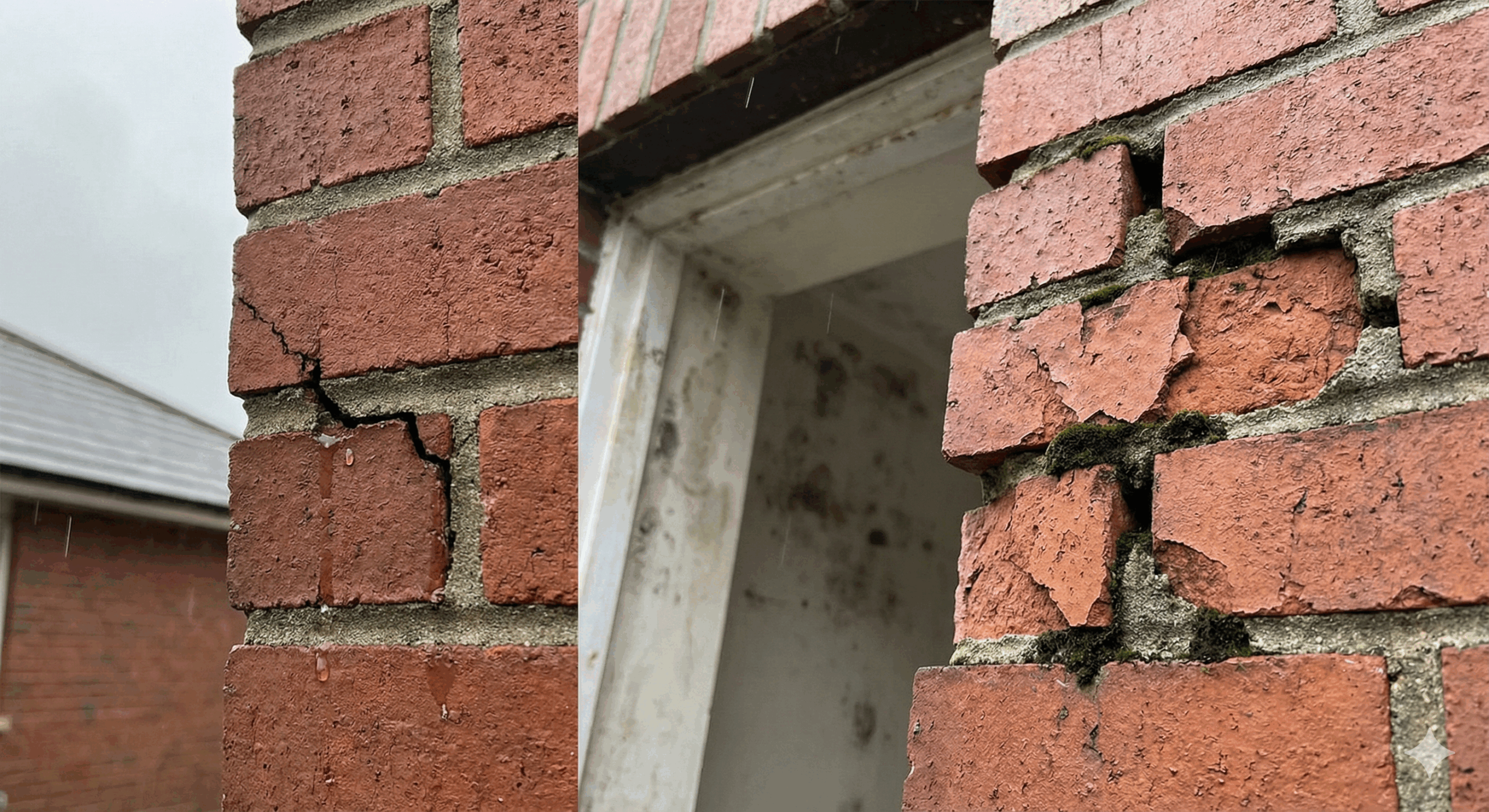
What starts as a few hairline cracks in the mortar joints is an open invitation for water. Here in Seattle, the constant rain and freeze-thaw cycles turn these small openings into destructive pathways. Water seeps in, freezes, expands, and widens the cracks. This process, repeated over a single wet season, can cause the mortar to fail and the face of the brick to flake or pop off, a problem known as spalling.
Similarly, a small, unnoticed leak in the building’s exterior can have devastating effects. Water can bypass the brick and saturate the wall cavity, damaging insulation, rotting wood framing, and creating the perfect environment for mold to grow on your interior drywall. What was once a simple caulking or tuckpointing fix has now become a complex issue involving water damage, mold remediation, and structural repair.

The Financial Dominoes: Early Repair vs. Full Remediation
Postponing masonry maintenance might feel like saving money in the short term, but it almost always leads to exponentially higher costs down the road. Let’s compare two real-world scenarios to illustrate the financial impact.
Scenario A: Proactive Early Repair. A property manager in Bellevue notices a few sections of mortar eroding on a 20-foot stretch of an exterior wall. They call for a professional inspection. The diagnosis is that the joints are failing and need to be addressed before water gets in.
- Action: A crew performs tuckpointing on the affected area, grinding out the old mortar and replacing it with a new, durable mixture.
- Estimated Cost: A few thousand dollars.
- Result: The problem is solved, the building envelope is secure, and further damage is prevented.
Scenario B: Deferred Maintenance and Full Remediation. The same property manager decides to wait a year to address the mortar. Through a wet winter, water penetrates the wall, leading to spalling bricks, interior water stains, and a musty smell in the offices along that wall.
- Action: Now, the repair requires not only tuckpointing the entire wall but also replacing dozens of spalled bricks, opening the interior wall to replace damaged insulation and drywall, and performing professional mold remediation.
- Estimated Cost: Tens of thousands of dollars.
- Result: A far more expensive, disruptive, and time-consuming project that could have been easily avoided.
More Than Just a Wall: Impact on Energy and Building Envelope
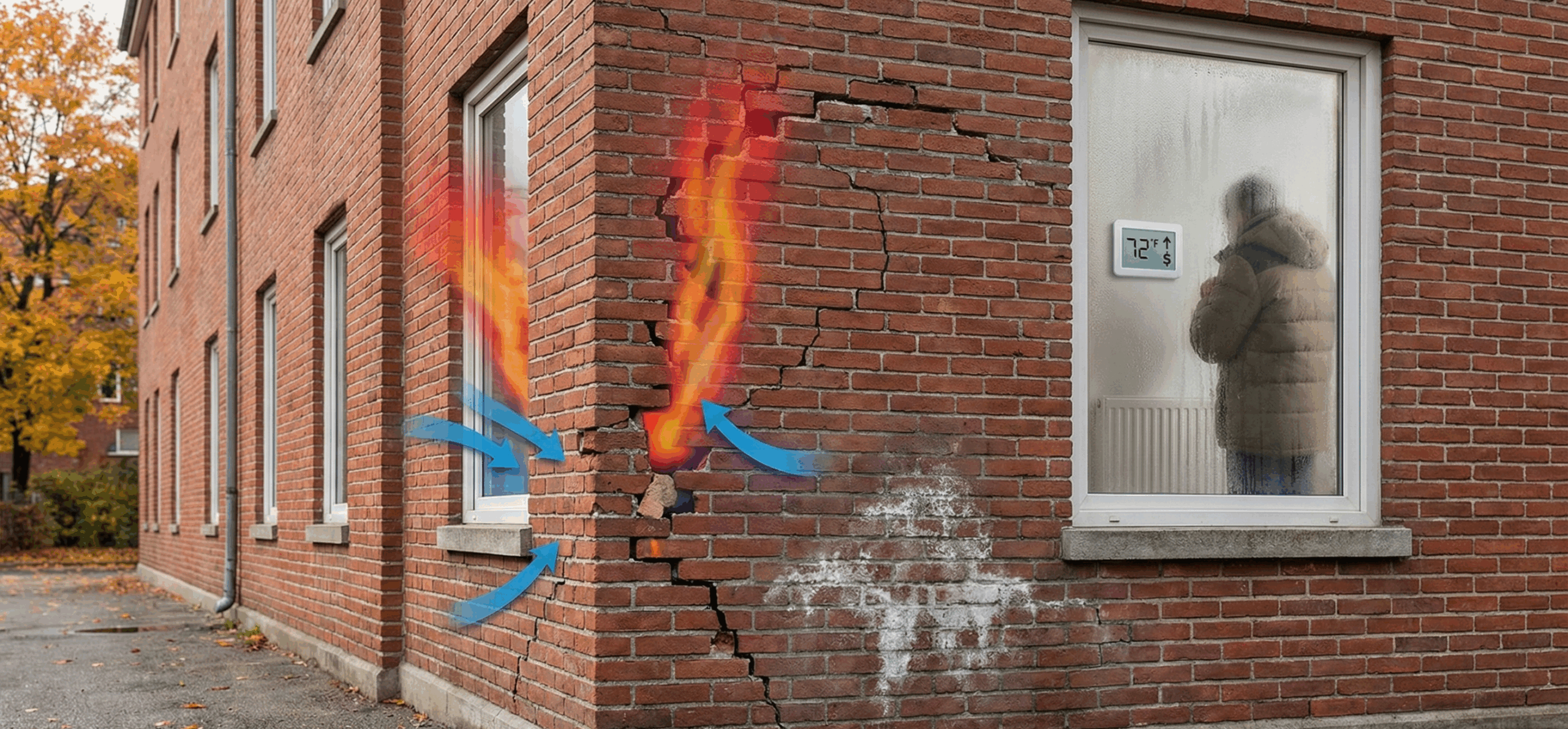
Your building’s masonry is a critical component of its “building envelope,” the physical barrier that separates the conditioned interior from the unconditioned exterior. When this envelope is breached by cracks, gaps, or failed mortar, it has a direct impact on your property’s performance and operating costs.
Gaps in the masonry allow for uncontrolled air leakage. This means that in the winter, heated air escapes, and in the summer, cool air is lost. Your HVAC system is forced to work overtime to maintain a comfortable temperature, leading directly to higher energy bills month after month.
Furthermore, a compromised building envelope allows moisture to infiltrate the wall system. This reduces the effectiveness of your insulation and can lead to persistent dampness, poor indoor air quality, and the structural decay of building materials. Protecting your building envelope is essential for both efficiency and the long-term health of the structure.
Beyond the Bottom Line: Liability and Safety Risks for Property Owners
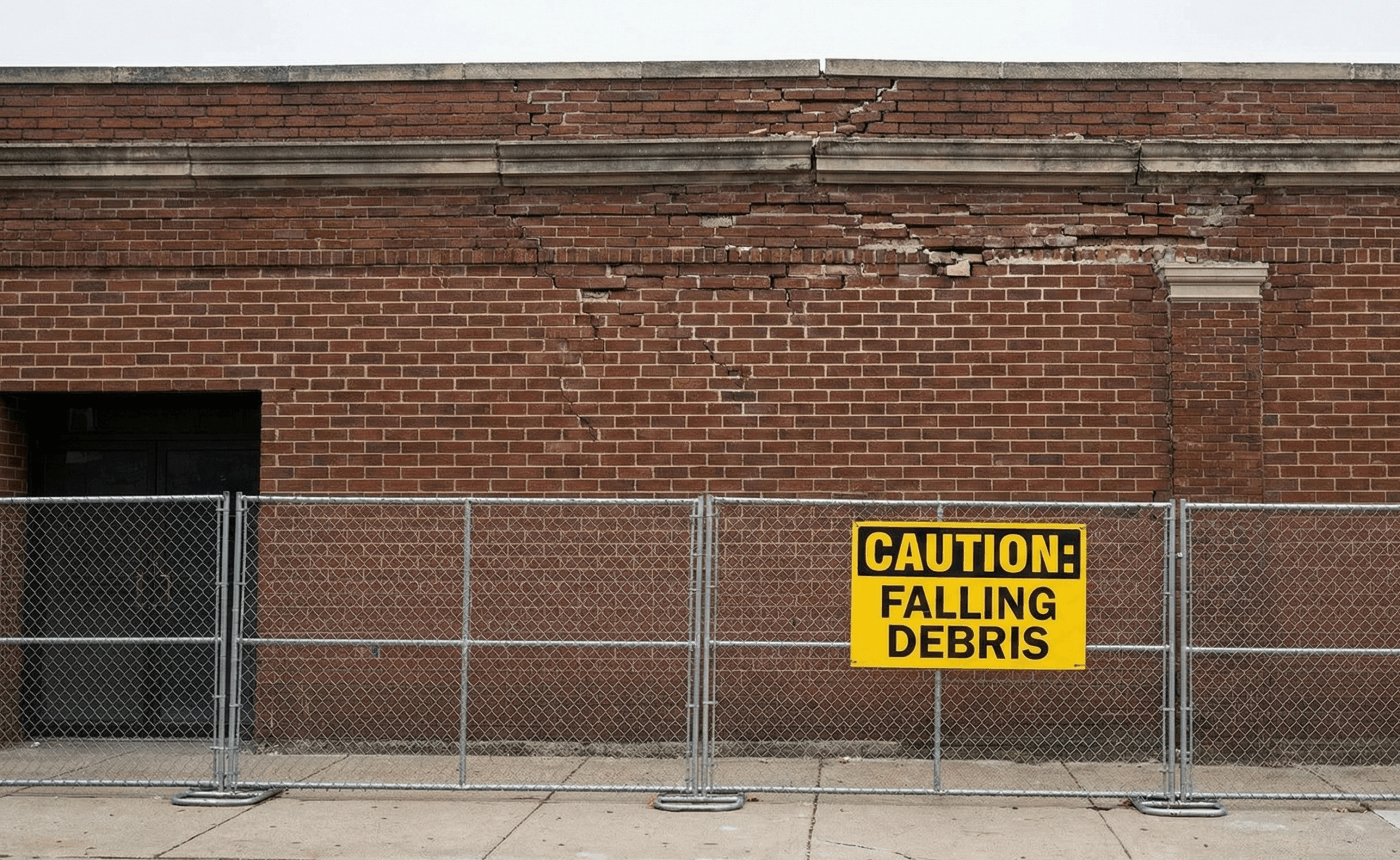
For commercial property owners, deferred masonry maintenance is not just a financial risk; it’s a significant liability. Crumbling mortar and spalling bricks can become falling debris, posing a direct threat to tenants, customers, and pedestrians. An injury caused by falling masonry can lead to serious legal and financial consequences.
In a seismically active region like Seattle, the risks are even greater. A building with weakened masonry walls is far more vulnerable to structural failure during an earthquake. The mandatory retrofit policies for unreinforced masonry (URM) buildings underscore this danger. Proactive maintenance, including seismic retrofitting where necessary, is a crucial part of a property owner’s responsibility to ensure public safety and protect their investment from catastrophic loss.
A Proactive Approach: The Recommended Annual Inspection Schedule
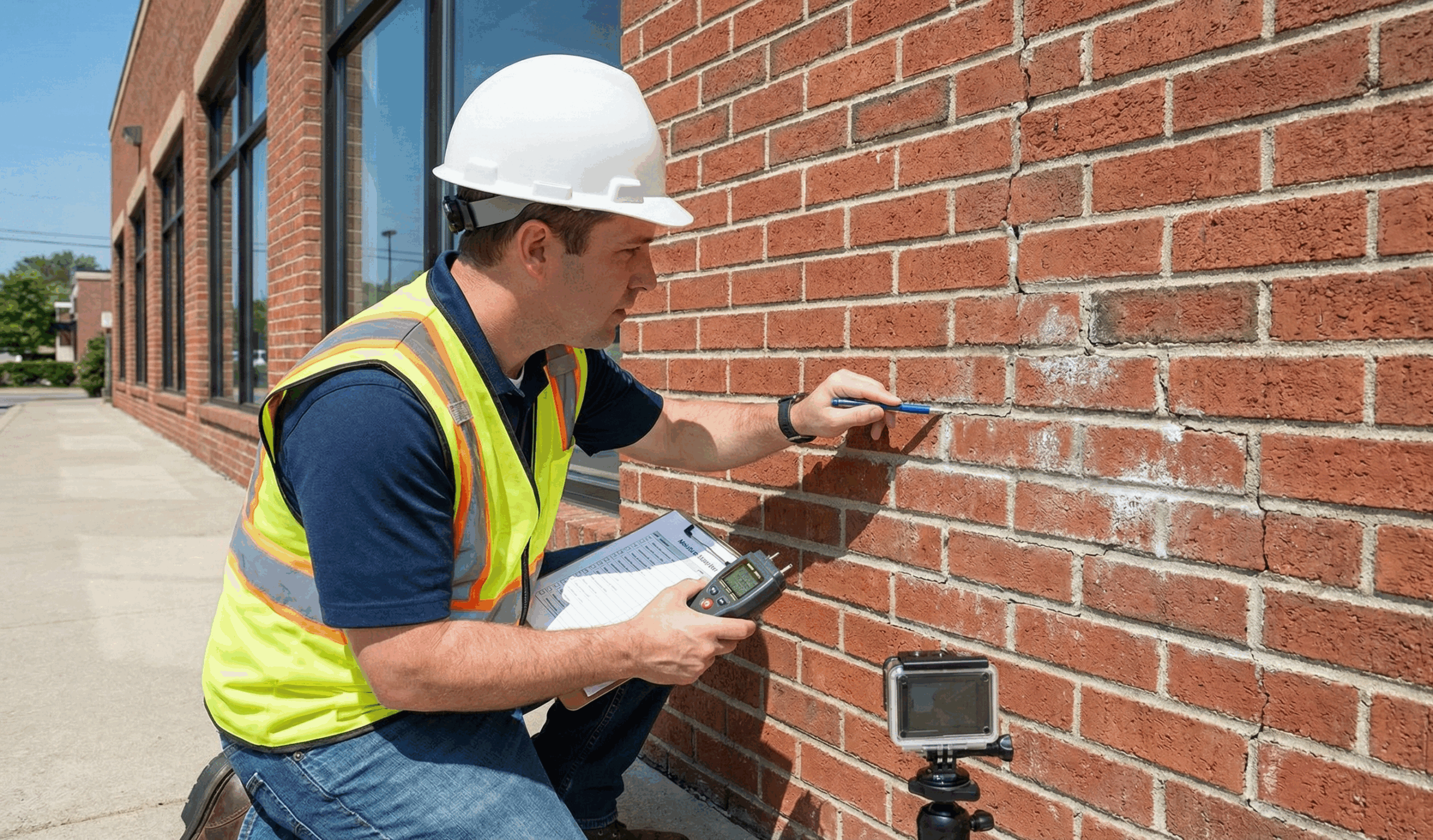
The best way to avoid the hidden costs of deferred maintenance is to be proactive. We recommend that property owners conduct a visual inspection of their masonry at least once a year, ideally after the wet winter season. Walk the perimeter of your building and look for these warning signs:
- Cracked or crumbling mortar joints.
- Spalling or flaking on the face of bricks.
- White, powdery residue on the brick surface (efflorescence), which indicates water penetration.
- Dark, damp patches on the wall that take a long time to dry.
- Visible cracks in the bricks or foundation.
- Water stains on interior walls or ceilings.
While a visual check is a great first step, it’s no substitute for a professional assessment. A trained masonry expert can identify subtle issues and diagnose the root cause of a problem, ensuring the correct repair is made.
Conclusion
The message is clear: when it comes to masonry, a small problem left alone will never fix itself. It will only grow larger, more complex, and more expensive to resolve. Proactive maintenance is not an expense; it is an investment in your property’s value, safety, and longevity. By understanding the risks of deferral and committing to an annual inspection schedule, you can protect your building from the compounding costs of neglect and ensure it remains a safe, durable, and valuable asset for decades to come.
Small Masonry Problems Never Stay Small, Act Now
If you have noticed any of the warning signs discussed in this article, or if you’re ready to schedule a professional annual inspection for your property in the Seattle, Kirkland, or Bellevue area, contact the experts at Rife Masonry. Our union-trained team is ready to provide a comprehensive assessment and a free, no-obligation quote to help you protect your investment.