
As a property manager in the Pacific Northwest, you are the first line of defense protecting a building’s value and structural integrity. One of the most critical yet often overlooked components in this defense is the sealant used on your masonry. In a climate famous for its persistent rain and fluctuating temperatures, a failed sealant joint is more than a cosmetic issue; it’s an open invitation for water damage, mold growth, and costly structural repairs. This guide will equip you with the essential knowledge to navigate the world of masonry sealants, helping you understand the differences between products, why they fail, and how to create a maintenance plan that safeguards your investment.
Choosing the Right Sealant: Silicone vs. Polyurethane vs. Hybrid
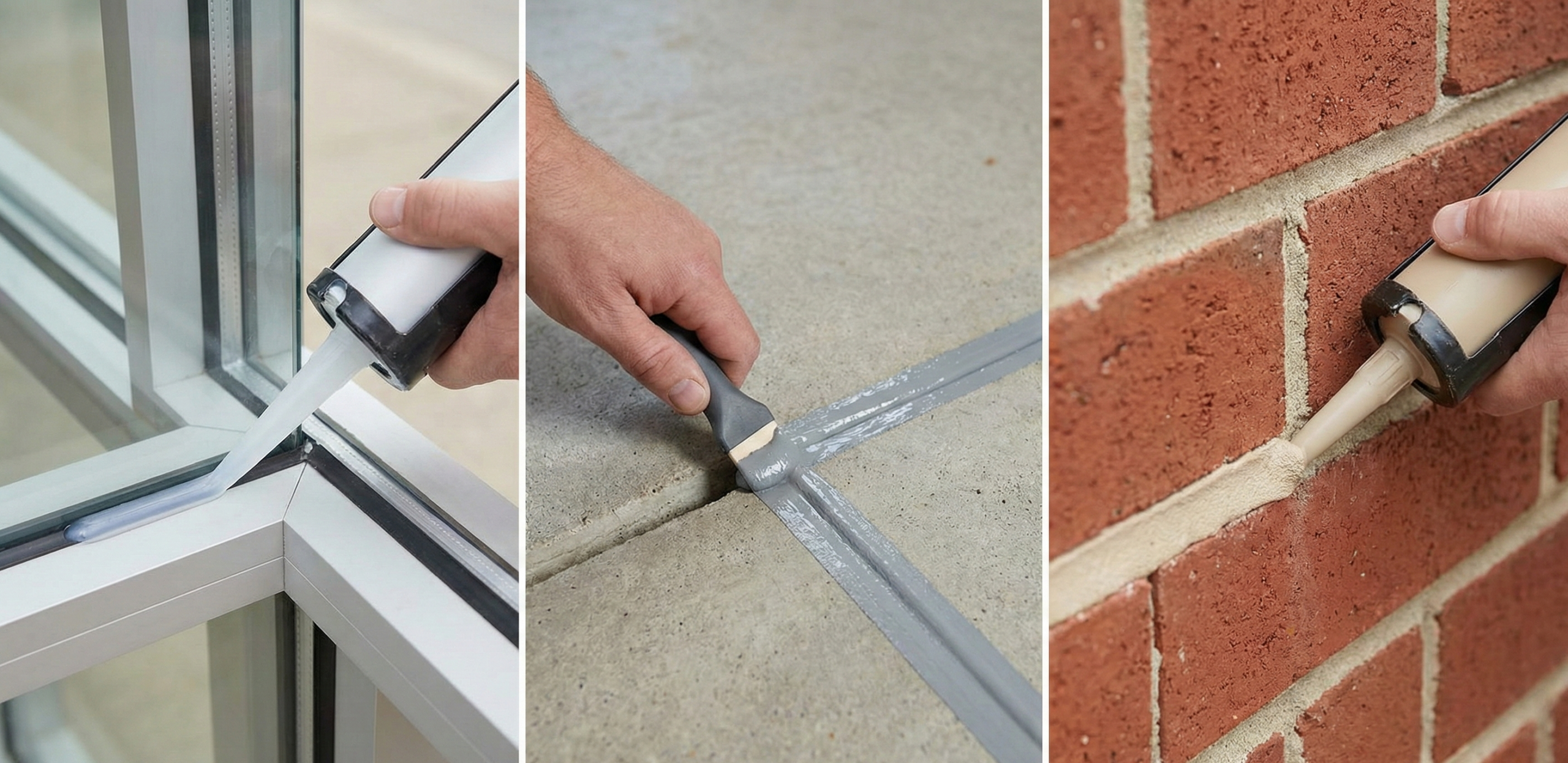
Not all sealants are created equal. The choice of sealant can mean the difference between a joint that lasts for decades and one that fails in just a few years. Understanding the core differences between the main types is crucial for making an informed decision for your property.
Silicone Sealants
Silicone sealants are known for their exceptional flexibility and resistance to extreme temperatures and UV light. This makes them a popular choice for exterior applications where movement and sun exposure are significant factors.
- Pros: Highly flexible, excellent UV resistance, long lifespan, and waterproof.
- Cons: Most standard silicones cannot be painted and may require a primer on porous masonry.
- Best For: Joints that experience significant movement, such as expansion joints and window perimeters, especially on sun-exposed facades.
Polyurethane Sealants
Polyurethane sealants are prized for their durability and strong adhesion. They create a tough, abrasion-resistant seal that can withstand physical wear and tear, making them suitable for high-traffic areas.
- Pros: Extremely durable, paintable, and offers excellent adhesion.
- Cons: Shorter lifespan than silicone, less flexible, and can degrade with prolonged UV exposure if not painted.
- Best For: Sealing around doors, control joints in concrete, and areas that will be painted to match the building’s exterior.
Hybrid Sealants
Hybrid sealants, often made from silyl-terminated polyether (STPE) or modified silicone (MS), offer the best of both worlds. They combine the flexibility and UV resistance of silicone with the paintability and durability of polyurethane.
- Pros: Excellent flexibility and UV stability, paintable, adheres to a wide range of materials without a primer, and has a very long lifespan.
- Cons: Can be the most expensive option upfront.
- Best For: A wide variety of applications, serving as a high-performance, all-in-one solution for almost any masonry joint on a building envelope.
Why Do Sealant Joints Fail? Common Culprits in the Pacific Northwest
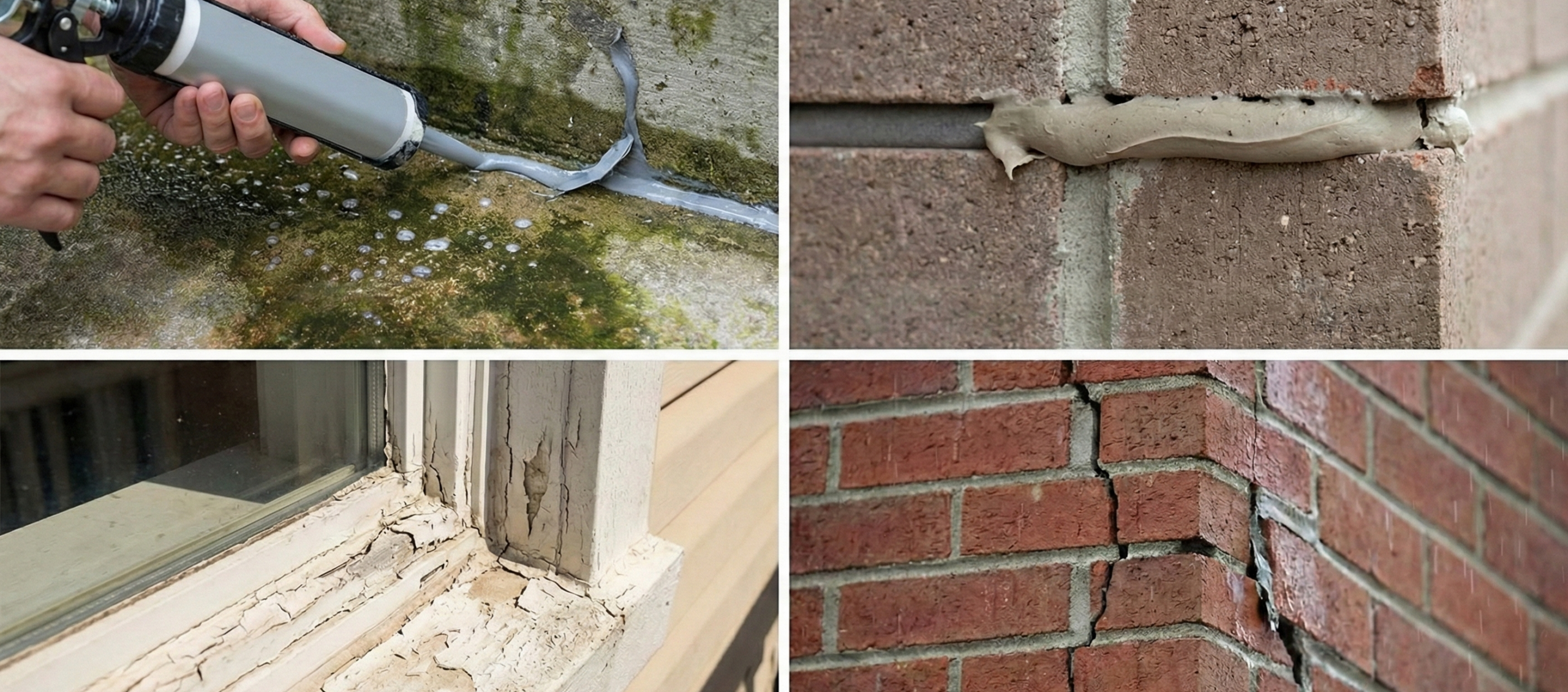
Even the best sealant will fail if not applied correctly or if it’s the wrong product for the job. Sealant failure is a leading cause of water intrusion in commercial buildings. When a joint opens up, it creates a direct channel for rainwater to get behind the brick or stone facade, where it can saturate insulation, corrode structural steel, and lead to widespread mold growth. Here are the most common reasons sealants fail:
Improper Surface Preparation
Applying sealant to a dirty, dusty, or damp surface is a recipe for failure. The sealant cannot form a strong bond, leading to premature peeling and adhesion failure. All old sealant and debris must be completely removed for a lasting repair.
Incorrect Application
The depth and width of the sealant bead are critical. If a joint is too deep, it restricts the sealant’s ability to flex. If it’s too shallow, it may not have enough surface area to adhere properly. Professional application ensures the use of backer rod to control depth and proper tooling to create a watertight seal.
UV Degradation
Constant sun exposure, even the filtered sun of the Seattle area, breaks down the chemical structure of certain sealants over time. This causes them to become brittle, crack, and lose their flexibility.
Building Movement
All buildings settle and shift. If a sealant is not flexible enough to accommodate this movement, it will tear or pull away from the substrate, breaking the seal.
Pacific Northwest Weather
The relentless cycle of rain, combined with occasional freeze-thaw cycles, puts immense stress on sealant joints. Water can exploit the smallest imperfection, and freezing temperatures can cause that trapped moisture to expand, forcing the joint apart.
Sealant Lifespan and Replacement Schedules for Seattle Properties
How long should you expect your building’s sealant to last, and how often should you plan for replacement? While product data sheets provide estimates, the reality in the wet and variable climate of the Greater Seattle area can be different.
As a general guideline in the Greater Seattle climate, typical service life ranges are:
- Polyurethane: around 5-10 years
- Silicone: around 10-20 years
- Hybrid (STPE/MS): often similar to or longer than high-end silicones, depending on exposure and detailing.
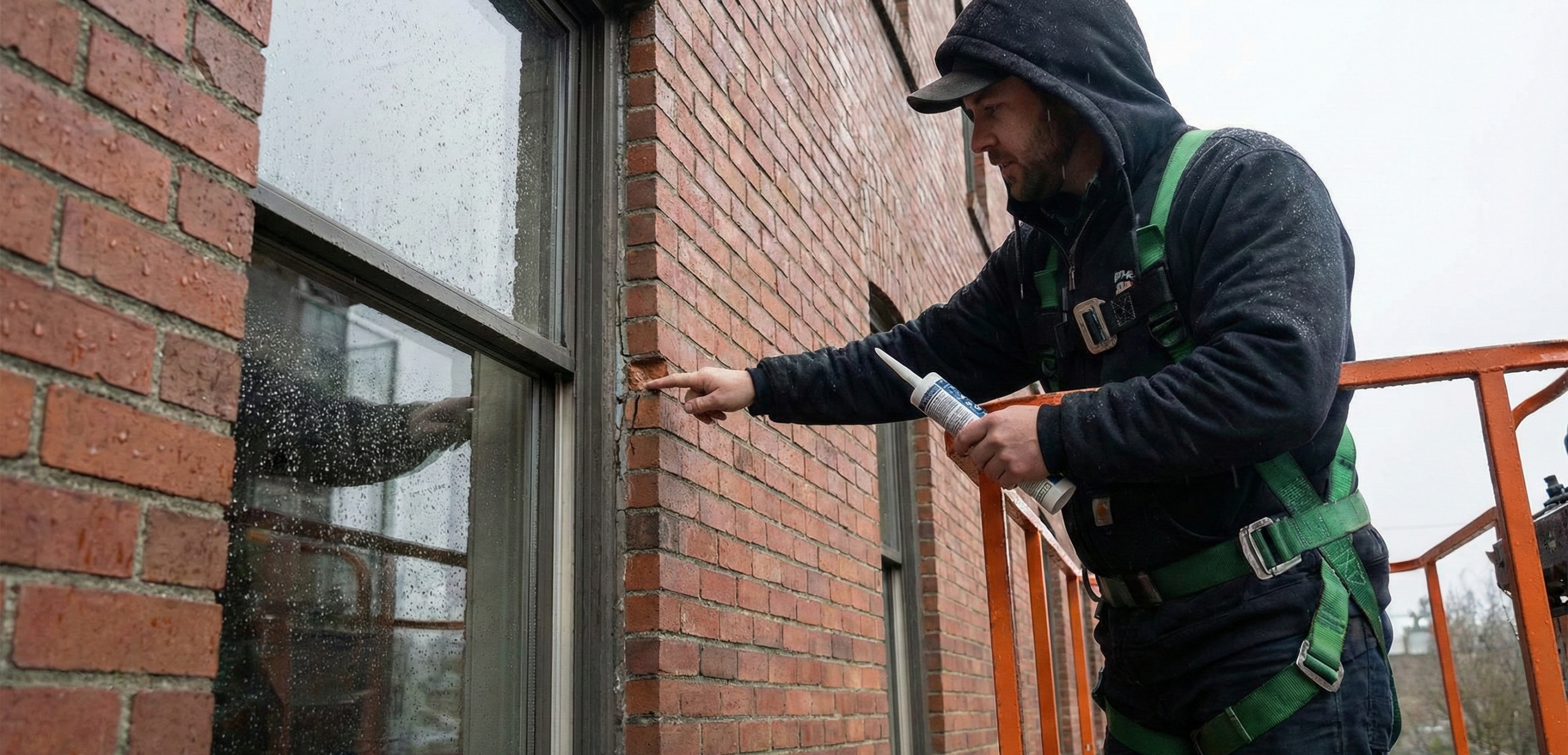
However, proactive maintenance is more effective than relying on a calendar date. As a property manager, you should perform annual visual inspections of your building’s envelope. Look for:
- Cracks or splits in the sealant.
- The sealant is pulling away from the brick or window frame (adhesion failure).
- A chalky or powdery appearance, indicating UV degradation.
- Gaps or holes in the sealant bead.
A full building reseal is a significant project but a necessary investment in the property’s long-term health. Many commercial and multifamily buildings in our region plan for a full reseal every 10–20 years, with targeted repairs in between based on routine inspections. A professional assessment can help you budget and plan for this critical maintenance task before minor failures lead to major problems.
Conclusion
The sealants on your building are a small but mighty part of its defense system. Choosing the right material for the application, ensuring it’s installed by skilled professionals, and adhering to a regular inspection schedule are key to protecting your property from the elements. By understanding the differences between silicone, polyurethane, and hybrid sealants and recognizing the signs of failure, you can prevent costly water damage and extend the life of your building’s masonry.
Protect Your Investment with a Professional Sealant Assessment
If you have questions about the condition of your building’s sealants or are concerned about potential water intrusion, don’t wait for the damage to become obvious. Contact Rife Masonry’s union-trained masonry team for a comprehensive building envelope and sealant inspection. We work closely with property managers across Greater Seattle to prioritize repairs, plan resealing projects, and keep your buildings dry, safe, and performing for the long term.