
Have you noticed a new crack forming on your home’s exterior? Seeing damage on a brick wall can be alarming, but not all issues are created equal. Some cracks are simple signs of aging, while others can point to significant structural problems. Misdiagnosing the issue can lead to improper repairs that waste money and, in some cases, cause even more damage. This guide will help you understand the difference between failing mortar and cracked bricks, so you can determine what requires immediate repair versus what you can simply monitor.
Why Identifying the Right Problem Matters
Brick and mortar are two distinct materials that fail in different ways. Mortar is designed to be the sacrificial element of a masonry wall, absorbing stress and weathering away over decades. Bricks, on the other hand, are the structural backbone, intended to last for a century or more.
Repairing the wrong material or using an incorrect method is a common and costly mistake. For example, patching a structural crack with a cosmetic filler only hides the underlying problem, allowing it to worsen over time. Understanding whether you’re dealing with a simple mortar issue or a more serious brick problem is the first step toward a lasting and effective brick repair that protects the value and safety of your property.
Understanding the Roles of Brick and Mortar
To diagnose issues with your masonry, it is essential to first appreciate the distinct job that each component performs. Think of a brick wall as a system where each part has a specific function.
What Bricks Do
Bricks are the primary source of compressive strength in a wall. They bear the load of the structure above them and provide rigidity and durability. Fired at high temperatures, bricks are incredibly resilient to weather and physical force. In a properly constructed wall, the bricks are the last element to fail. They are designed for longevity, often lasting for generations with proper care.
What Mortar Does
If bricks are the bones, mortar is the connective tissue. Its job is not just to hold bricks together but also to provide flexibility. Mortar creates a cushion between bricks, absorbing the subtle movements caused by thermal expansion, contraction, soil settlement, and wind loads. It is intentionally softer than the brick so that it can act as a sacrificial layer. Over time, it is the mortar that is meant to crack and wear away, protecting the more important and expensive bricks from damage.
Signs of Failing Mortar (Common and Repairable)
Because mortar is designed to wear out first, seeing signs of its decay is common, especially in older homes. Fortunately, these issues are typically straightforward to repair through a process called repointing.
Visual Indicators
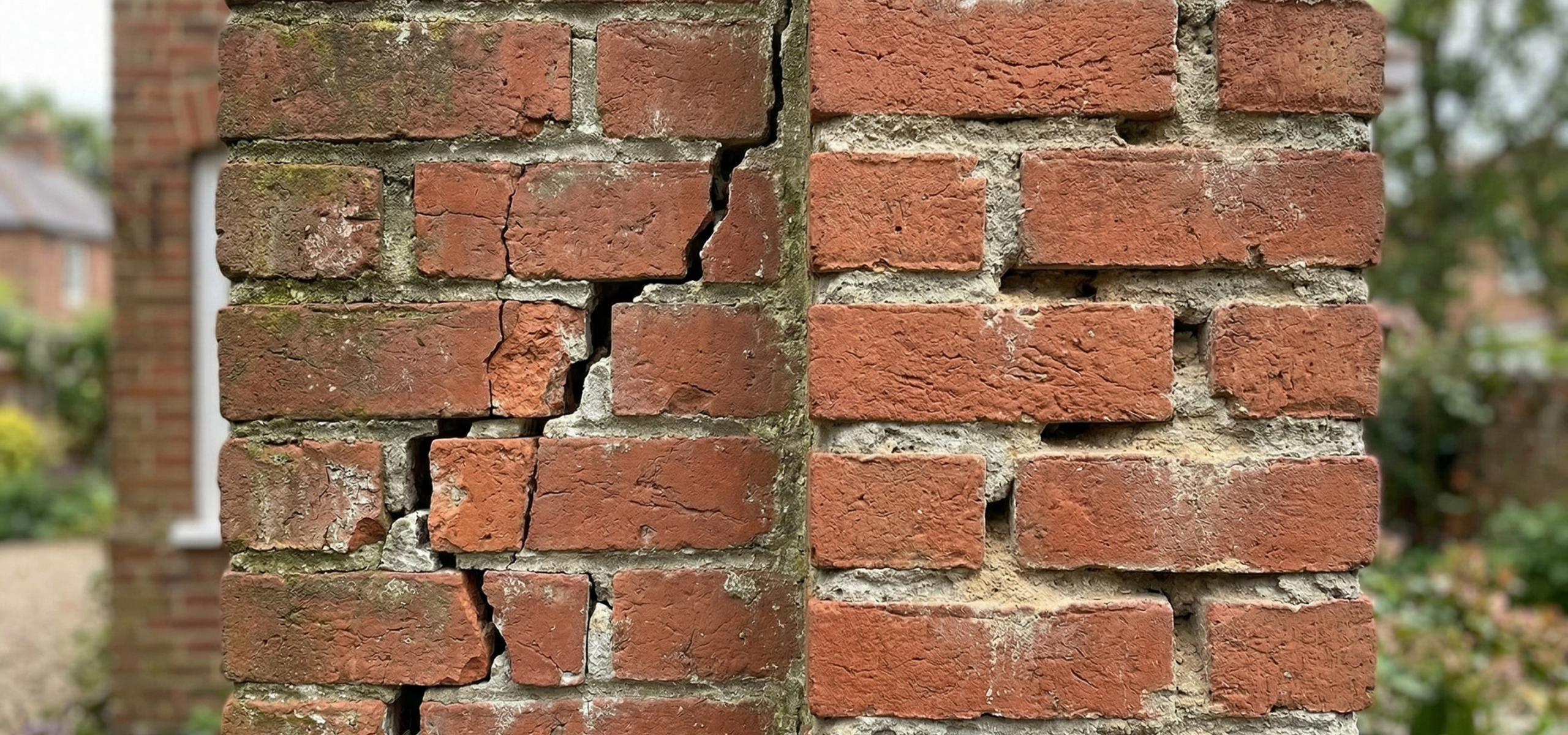
Look closely at the joints between your bricks. Are they cracking or appearing to recede from the face of the brick? Do you see gaps opening up? If you touch the mortar, does it feel sandy or crumble easily? These are all classic visual signs that the mortar has reached the end of its service life and is no longer effectively bonding the bricks or sealing out moisture.
Moisture Indicators
Failing mortar often allows water to penetrate the wall system. One of the most obvious signs is efflorescence, a white, chalky powder that appears on the surface of the brick. This is caused by water-soluble salts being drawn out of the material as moisture evaporates. In more advanced cases, you might notice damp patches on interior walls or see water actively seeping through the mortar joints during heavy rain.
Typical Repair Needed
The standard repair for failing mortar is tuckpointing. This process involves carefully grinding out the old, decayed mortar and replacing it with new mortar that is specifically formulated to match the strength, color, and texture of the original. When done correctly, repointing restores the wall's integrity and appearance.
Signs of Damaged or Cracked Bricks (More Serious)
While failing mortar is expected, damaged bricks often signal a more serious underlying problem. Brick damage requires a more thorough investigation to determine the root cause.
Surface Damage
Surface-level damage can include spalling, where the face of the brick flakes or peels away. This is often caused by moisture freezing and expanding within the brick itself. You may also see corners breaking off or a general scaling of the brick's surface. While sometimes cosmetic, widespread spalling can indicate a systemic moisture problem.
Structural Damage
The most concerning issues are signs of structural stress. Are bricks split completely through the middle? Do you see long, horizontal cracks running across a wall, or multiple cracked bricks clustered in one area? These types of fractures suggest that the wall is under immense pressure, possibly from foundation settlement, a failed lintel above a window, or other significant structural forces.
Typical Repair Needed
Repairing damaged bricks is more involved than repointing. It may require the careful removal and replacement of individual bricks. If the damage is linked to structural movement, the repair must also include structural stabilization to address the root cause and prevent the problem from recurring.
Cosmetic vs. Structural: How to Tell
Distinguishing between a minor cosmetic flaw and a serious structural concern is critical for prioritizing repairs.
Usually Cosmetic
- Hairline mortar cracks: Very thin cracks isolated to a few mortar joints.
- Minor surface chips: A single chipped corner on a brick from an impact.
- Isolated damage: A single cracked brick in a non-load-bearing area.
These issues are typically not urgent but should be monitored to ensure they do not worsen.
Potential Structural Concern
- Step cracking: Cracks that follow the mortar joints in a stair-step pattern up or down a wall, often indicating foundation movement.
- Moving or loose bricks: Any brick that you can wiggle or move with your hand.
- Bulging walls: An outward curve or bulge in a brick wall.
Leaning chimney: A chimney that is visibly tilting away from the house.
If you see any of these signs, it is crucial to have your property evaluated by a professional mason immediately.
Urgent vs. Optional Repairs
Here is a simple framework to help you decide on the urgency of your masonry repairs.
Monitor / Optional Maintenance
Issues like very fine mortar cracks, minor efflorescence staining that appears infrequently, or a single chipped brick can typically be monitored. Note their location and check them periodically to see if they change.
Schedule Repair Soon
If you notice mortar joints that are visibly widening, repeated moisture staining after every storm, or the early signs of spalling on several bricks, it is time to schedule a repair. Addressing these issues sooner rather than later prevents them from evolving into more complex and expensive problems.
Immediate Professional Repair
Do not delay if you discover loose bricks, water actively leaking into your home’s interior, or large cracks accompanied by wall movement or bulging. These are signs of critical failure that could compromise the safety and integrity of your home.
Why the Wrong Repair Causes More Damage
Attempting a quick fix without understanding the materials can do more harm than good. A common mistake is using a modern, high-strength mortar on an older or historic home. These hard mortars are inflexible and can cause the surrounding softer, historic bricks to crack under pressure.
Another frequent error is applying a water-repellent sealer over a wall with existing moisture problems. Instead of keeping water out, this often traps moisture inside the wall, leading to accelerated decay, spalling, and mold growth. Proper masonry repair is a science that requires matching materials and techniques to the specific structure.
Conclusion
By learning to read the signs your brick home is giving you, you can make informed decisions about its care. Remember that mortar is designed to be the sacrificial element, and its failure is a normal part of a building’s lifecycle. Cracked or moving bricks, however, often point to more significant forces at play. A correct diagnosis is key to determining the proper repair, and addressing issues early is the best way to prevent minor flaws from becoming major structural failures. A professional evaluation is the most reliable way to protect your historic or modern masonry structure for the future.
Brick Repair FAQs
How do I know if a brick crack is structural or just cosmetic?
Cracks that run through multiple bricks, form stair-step patterns, or widen over time usually indicate structural movement. Small isolated cracks in mortar joints are typically normal aging and repaired with tuckpointing.
Should I repair cracked bricks or just repoint the mortar joints?
If the mortar is crumbling but the bricks are intact, repointing is the correct repair. If bricks are splitting, loose, or flaking apart, they must be replaced; repointing alone will not stop the damage.
Is water coming through brick walls caused by bad bricks or bad mortar?
Most leaks occur because deteriorated mortar joints allow water inside. However, repeated moisture exposure can eventually damage the bricks themselves, turning a simple repair into a restoration project.
Can I seal brick cracks with caulk or a waterproof coating?
Surface sealants rarely fix masonry problems and can trap moisture inside the wall. Proper repairs address the failed material, replacing mortar or brick, rather than covering it.
When should I call a mason instead of monitoring the crack?
You should schedule an inspection if cracks grow, bricks move when touched, walls bulge, or interior moisture appears. These signs indicate structural stress that won’t stop on its own.
Identify the Real Cause of Your Brick Damage
A correct diagnosis is the foundation of a successful, long-lasting repair. If you are unsure about the condition of your brickwork or want an expert opinion on the right course of action, a professional evaluation is your best next step. Our specialists can identify the root cause of the damage and develop a precise repair plan tailored to your property.