
That small crack in your brickwork or mortar might seem like a minor cosmetic flaw, something to add to a long list of future property projects. It’s easy to overlook. However, what looks like a simple blemish today is often the first warning sign of a slow-moving but relentless problem. Moisture is likely infiltrating your masonry, starting a chain reaction that can lead to significant structural issues and exponentially higher repair bills. This article explores the true cost of delaying brick repair, showing why addressing small problems immediately is the smartest financial decision you can make for your property.
Small Brick Problems Rarely Stay Small
A pristine brick facade is more than just beautiful; it’s a building’s first line of defense against the elements. When that defense is breached, even by a tiny crack, the damage rarely remains localized. Masonry is a porous system, and once moisture finds a path inside, it begins to spread, often unseen.
Early warning signs, like faint cracks or a powdery white residue on the brick surface, are often dismissed as simple aging. In reality, they are symptoms of water moving through the wall assembly. By waiting, you give this moisture the time it needs to saturate materials, rust metal components, and create the perfect conditions for the freeze-thaw cycle to wreak havoc. What begins as a simple repointing job can evolve into a complex structural problem, transforming a minor expense into a major reconstruction project. Delaying repairs allows this gradual deterioration to compromise the integrity of your business from the inside out.
How Brick Damage Progresses Over Time
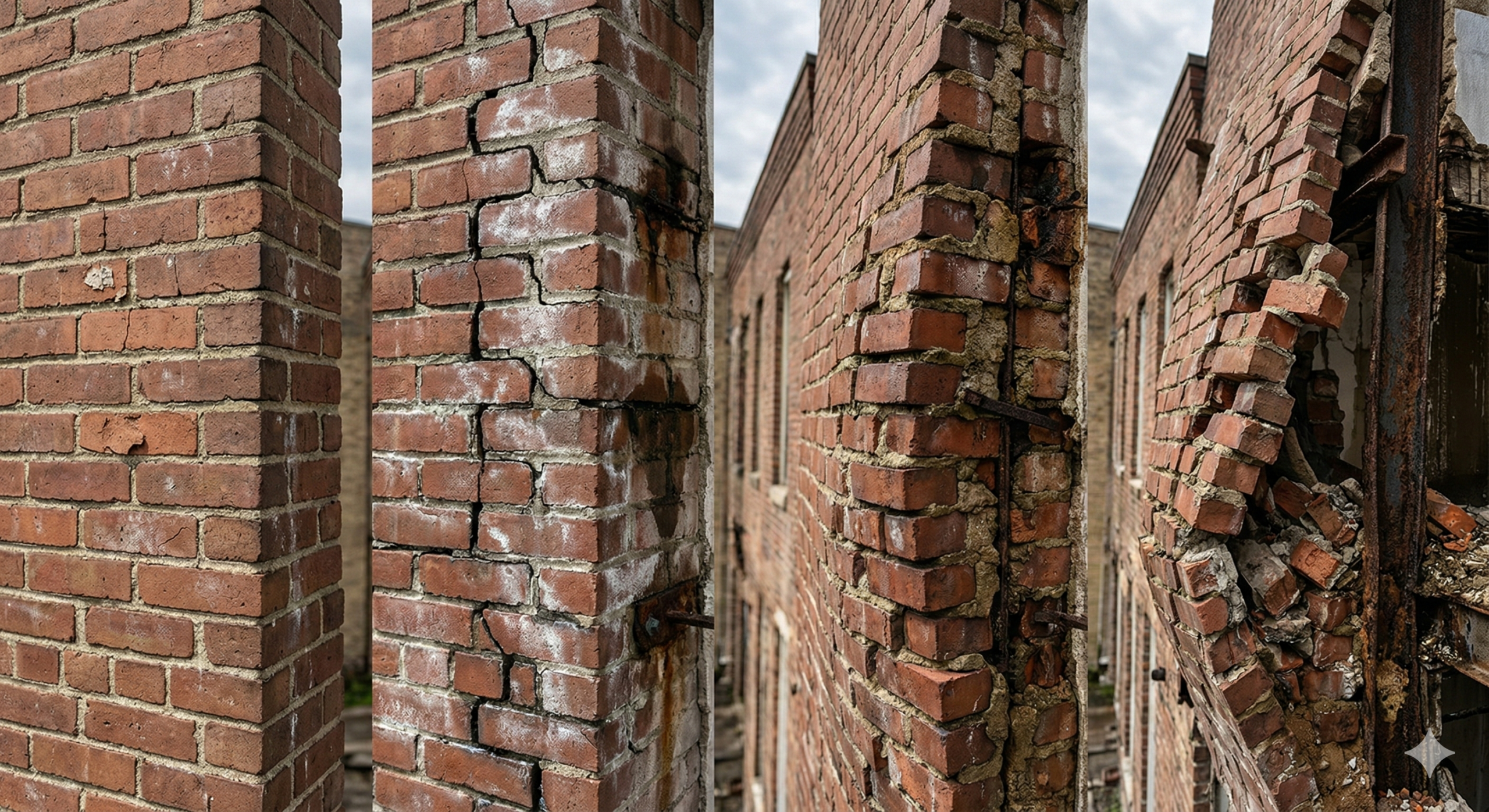
Understanding how masonry damage evolves can help you recognize the urgency of a situation. The process typically follows a predictable, four-stage progression from a minor issue to a major structural failure.
Stage 1: Hairline Deterioration
This is the initial, often deceptive, stage. You might notice small, hairline cracks in the mortar joints or brick faces starting to flake. You may also see efflorescence—a white, chalky deposit. At this point, the damage is almost entirely cosmetic, but it’s a clear signal that water is present where it shouldn't be.
Stage 2: Active Moisture Intrusion
As cracks widen, water enters the wall system freely. Mortar joints start to soften and degrade, and bricks can become saturated, losing structural capacity. Inside, you might notice a persistent musty odor or increased humidity levels in rooms adjacent to the exterior wall.
Stage 3: Structural Movement
The damage is now visibly structural. Bricks may become loose to the touch or appear pushed out from the wall plane. Entire sections might bow or bulge outward, or a chimney could lean. These are alarming signs that the masonry assembly is losing its stability.
Stage 4: Major Failure
The crisis point. Partial or total failure of the structure is imminent. This could mean the collapse of a chimney or a section of wall giving way. Structural safety is the primary concern, requiring engineers, reconstruction, and significant costs to fix interior water damage.
The Financial Impact at Each Stage
The cost of repairs directly correlates with the stage of deterioration. What starts as an affordable maintenance task can quickly spiral into a project that strains your budget.
Early Repair Costs (Preventative)
If caught in Stage 1, repairs are relatively simple and cost-effective. The work is preventative and focused on stopping moisture before it causes widespread issues. This typically involves:
- Tuckpointing localized sections where mortar has cracked.
- Replace a few individual bricks that are spalling or broken.
- Applying a water repellent or performing other minor stabilization tasks.
Mid-Stage Costs
Once damage progresses to Stage 2 or 3, the scope and cost of the project increase significantly. The focus shifts from prevention to correction. You can expect expenses for:
- Repairing large sections of a wall, not just a few joints.
- Implementing moisture mitigation solutions to address the root cause.
- Beginning repairs on the interior of your property to fix water damage to drywall, paint, or insulation.
Late-Stage Costs
In the final stage of failure, the costs are substantial. The project is no longer a simple repair but a major reconstruction effort. The budget must account for:
- A complete chimney or wall rebuild.
- The involvement of structural engineers in designing and overseeing the solution.
- Extensive interior restoration, potentially including mold remediation.
- The high cost of labor and materials for a large-scale project.
Hidden Costs Business Owners Don’t Expect
The bill for the masonry work itself is often just the beginning. Delaying repairs allows moisture to inflict collateral damage throughout your property, leading to a variety of unexpected expenses that many business owners fail to anticipate. These can include:
Interior Damage
Water seeping through walls can destroy drywall, cause paint to bubble and peel, and stain interior finishes.
Mold Remediation
Where there is chronic moisture, there is often mold. Removing it safely and effectively requires specialized professionals and can be very costly.
Insulation Replacement
Saturated insulation loses its thermal properties and becomes a breeding ground for mold. It must be removed and replaced.
Energy Efficiency Loss
Gaps in your brickwork and damp insulation mean your heating and cooling systems have to work harder, leading to higher utility bills every month.
Property Value Reduction
Visible masonry damage and underlying structural concerns can significantly decrease your property value and curb appeal, making it difficult to sell.
Why Moisture Makes Repairs More Expensive
Moisture is the primary catalyst that turns small masonry issues into large ones. Its ability to travel and its reaction to temperature changes are what make it so destructive.
Water Spreads Behind Walls
The exterior damage you can see is often just a fraction of the total problem. Once water gets behind the brick veneer, it can travel downwards and sideways, soaking the sheathing, framing, and insulation. This hidden damage weakens the entire wall assembly from within, meaning the scope of a proper repair is much larger than what is visible on the surface.
Freeze-Thaw Acceleration
In climates with cold winters, the freeze-thaw cycle acts as a powerful engine of destruction. Water trapped within the pores of brick and mortar freezes and expands, exerting immense pressure. This expansion creates larger cracks and breaks the materials apart from the inside. Each winter, this cycle repeats, multiplying the extent of the deterioration and dramatically increasing the repair scope year after year.

The Return on Investment of Early Repair
Viewing early brick repair as an investment, rather than an expense, is key to protecting your property’s value. Proactive maintenance delivers a powerful return by:
Protecting Original Materials
Early intervention can often save your business’s original, sometimes historic, brick and mortar, preserving its character.
Preventing Full Reconstruction
A small pointing job today prevents a full wall rebuild tomorrow.
Maintaining Property Value
A well-maintained exterior protects your property’s value and curb appeal.
Lowering Lifetime Maintenance Costs
Addressing problems when they are small and manageable is always cheaper than waiting for a catastrophic failure.
Signs You Shouldn’t Wait to Call a Professional
If you observe any of the following signs, it’s time to stop watching and take action. These are clear indicators that your masonry requires immediate professional attention:
- Cracks in brick or mortar that are visibly expanding or widening over time.
- Recurring white, chalky stains (efflorescence) that return after being cleaned.
- Damp patches, musty smells, or visible water damage on interior walls.
- Loose bricks, chipping, or flaking away (spalling).
- A chimney or wall that appears to be leaning, bowing, or bulging.
Conclusion
The evidence is clear: masonry damage is a progressive issue that compounds over time. What starts as a minor flaw inevitably grows in scope, complexity, and cost. Waiting is a gamble that rarely pays off. By being proactive and addressing issues at the first sign of trouble, you move from a reactive position to a strategic one. Early repair delivers the best return on investment, protects your property from extensive damage, and ensures the long-term structural integrity of your business.

Brick Repair FAQs
How long can you wait to repair a cracked brick before it becomes serious?
Very little time in masonry terms. Small cracks allow moisture inside immediately, and damage accelerates with each rain and freeze-thaw cycle. What looks unchanged for months can suddenly worsen after one winter, turning a minor repair into a structural issue.
Does ignoring brick damage really make repairs more expensive?
Yes. Early repairs typically involve simple tuckpointing or replacing a few bricks. Waiting allows water to spread behind the wall, leading to insulation damage, mold, interior repairs, and sometimes full wall reconstruction, often costing many times more than the original fix.
What happens if water gets behind brick walls?
Water can soak sheathing, framing, and insulation without being visible outside. This hidden moisture weakens the wall structure, causes mold growth, and reduces energy efficiency. By the time interior damage appears, the repair scope is significantly larger than the original exterior crack.
What are the signs that brick damage has become structural?
Loose bricks, bulging walls, leaning chimneys, widening stair-step cracks, or interior moisture stains indicate structural movement. At this stage, repairs usually require major reconstruction rather than simple maintenance.
Is early brick repair worth it financially?
Yes, preventative masonry repair protects property value and avoids expensive rebuilds. Fixing small mortar deterioration early is one of the highest-ROI maintenance tasks because it stops the chain reaction of water damage before it spreads throughout the structure.
Need Brick Repair or Installation? Get Your Free Estimate Today
Understanding the nuances of proper brick and mortar repair is the first step toward protecting your business. If your property shows any of these signs, exploring professional solutions is crucial for safeguarding your investment and ensuring the work is done correctly.