
rife masonry
Masonry Waterproofing Seattle
Should You Waterproof Your Brick Building?
Waterproofing treatment makes sense on masonry that is structurally sound but absorbs more water than it can shed between storms. It does not make sense on a wall that is leaking through open joints, cracked units, or a failed coping, because those problems must be fixed first.
Good candidates include pre-1980 brick with exposed north or west faces, walls that show white salt deposits season after season, and elevations where moss and algae never completely clear. In a region with long wet stretches from October to spring, those walls rarely get a chance to dry fully, and the constant moisture wears down mortar and softens brick faces over time.
How Commercial Masonry Waterproofing Actually Works
Think of a brick wall as a sponge that also needs to exhale. During a storm, rain wicks into the brick and mortar. Between storms, and from the heated interior outward, that moisture leaves the wall as vapor. As long as both halves of the cycle keep working, the wall stays healthy. High-quality commercial waterproofing cuts down water intrusion and retains the masonry’s ability to breathe.
Penetrating Repellents Keep the Pores Open
The treatments we specify are penetrating water repellents, most commonly silane and siloxane formulations. The liquid is drawn into the masonry and reacts inside the capillaries, lining them with a thin water-repellent layer. Because the capillaries stay open, water vapor can still travel out of the wall. Their surfaces now repel water, so rain can no longer wick in easily. From the street, the wall looks the same. On a wet day, water beads and runs down the face instead of darkening it.
One Product Does Not Fit Every Wall
Historic soft-fired brick, dense modern brick, sandstone, granite, and concrete block each take in water at different rates. The label does not tell you whether a masonry waterproofer breathes. This is defined by its chemistry. We choose the product and coverage for the substrate and the exposure of each elevation.
Elastomeric Coatings Belong on Stucco
Coatings are not the wrong answer everywhere. On stucco, an elastomeric coating is often the right protection. It forms a thick, flexible film that bridges hairline cracks and keeps wind-driven rain out of the wall, and it can be recoated as part of routine maintenance. We apply elastomeric coatings to commercial stucco as part of our building envelope work. The rule is to match the treatment to the substrate: a flexible coating on stucco, a breathable repellent on brick.
Why Waterproofing Paint Is the Wrong Answer for Commercial Brick
Masonry waterproofing paint, waterproof brick paint, and similar elastomeric or acrylic coatings are often suggested as easy fixes, but they are not. Especially on commercial buildings, they usually create the problem they promise to solve.
A coating works by forming a skin over the face of the wall. That skin blocks rain, but it also blocks vapor. Meanwhile, water keeps entering the wall where the skin cannot reach. Paint does nothing at joint cracks, window frames, or parapets, and it cannot stop moisture moving out from inside the building. With the masonry face sealed, that moisture stays trapped in the outer layer of brick as it tries to exit.
Every winter freeze turns trapped water to ice, which expands and pries the outer face of the brick loose. Owners see peeling paint first and flaking brick second. By the time the coating is stripped, the original surface underneath is often gone. On historic brick, it cannot be recovered, only replaced unit by unit. We do not coat or paint brick as a waterproofing method for exactly these reasons.
When Waterproofing Is Not the First Step
Mortar joints are where most water enters a brick wall, and a repellent applied to the brick face does very little to close an open joint.
Repair has to come before protection. Our sequence on every waterproofing job:
- 1 Walk each elevation and document open or eroded joints, cracked and spalled units, and deteriorated sealant.
- 2 Renew the joints with commercial tuckpointing, and cut out and replace failed brick with our brick repair services.
- 3 Clean the masonry, then allow enough dry weather for the wall to release its moisture.
- 4 Apply the penetrating repellent at the manufacturer's specified coverage.
Benefits of Masonry Waterproofing
Waterproofing extends the service life of a brick or stone facade by limiting how much water the masonry takes in. Applied to a healthy or repaired wall, a vapor-permeable repellent reduces the moisture behind the maintenance problems property managers deal with most.
Decreases Moisture Penetration
Untreated brick and mortar soak up rain, and in a Seattle wet season that water rarely has time to leave. A penetrating repellent cuts absorption, so the wall carries less water through winter and dries faster.
Prevents Efflorescence
Efflorescence is the powdery salt deposit left when water moves through masonry and evaporates at the surface. It means moisture is moving through the wall. Cutting water absorption is the first step in preventing efflorescence on masonry surfaces.
Limits Biological Growth
Moss, mildew, mold, and algae need a damp surface to take hold. Walls that dry out between storms give them far less to work with, which keeps the facade cleaner and stretches the time between cleanings.
Reduces Spalling
Spalling is when a brick face cracks, flakes, or breaks away, usually because absorbed water froze inside it. Less water in the brick means less of the freeze damage that builds up year over year.
Waterproofing as Part of the Building Envelope
The building envelope is every layer that separates the interior from the weather: masonry walls, mortar joints, sealants, copings, and the openings for windows, vents, and conduit. Those pieces work together as one system, and a failure at any of them puts water into the wall. Waterproofing protects one layer, the masonry face, so it works best as part of a building envelope maintenance plan rather than as a standalone product.
That is why our assessments look at the whole wall before we recommend a repellent. A drip at a third-floor ceiling can start at a parapet cap two floors up, travel down inside the wall, and show up far from the actual opening. Treating the brick in that case spends the budget on the wrong layer.
Because the layers depend on each other, we scope them together. Our building envelope repairs address the wall as a complete system, and commercial brick caulking renews the sealant joints, so the repellent goes onto a wall that is tight everywhere else.
What we check on each elevation, from the top down:
- Copings and parapet caps shed rain from the top of the wall. A cracked coping sends water straight into the wall core.
- Mortar joints handle most of the water that hits the face. Eroded joints need repointing before anything else.
- Sealant joints at windows, doors, expansion joints, and penetrations harden and pull away over time. Different masonry sealant types age at different rates, so each seam is checked on its own condition.
- Brick and stone faces come last, once everything above and around them is tight. That is where a breathable repellent does its job.
Masonry Waterproofing Contractors in Seattle
Two crews can apply the same product and get very different brick waterproofing results. The ones that last come down to surface preparation, dry conditions, and even coverage. Before treatment, our masons repair damage, clean the masonry, and use a color-correction stain where patched areas need blending, then apply the repellent evenly across each elevation.
Rife Masonry’s union-trained masons work exclusively on commercial properties. The process is low-disruption, so businesses and tenants keep operating while we work. That combination of skilled crews and careful planning is why Seattle property manager Phil Nyberg calls us “the best masonry contractor in Seattle, bar none.”
Questions about a particular building? Call (206) 696-6998.
Our Masonry Waterproofing Work in Seattle
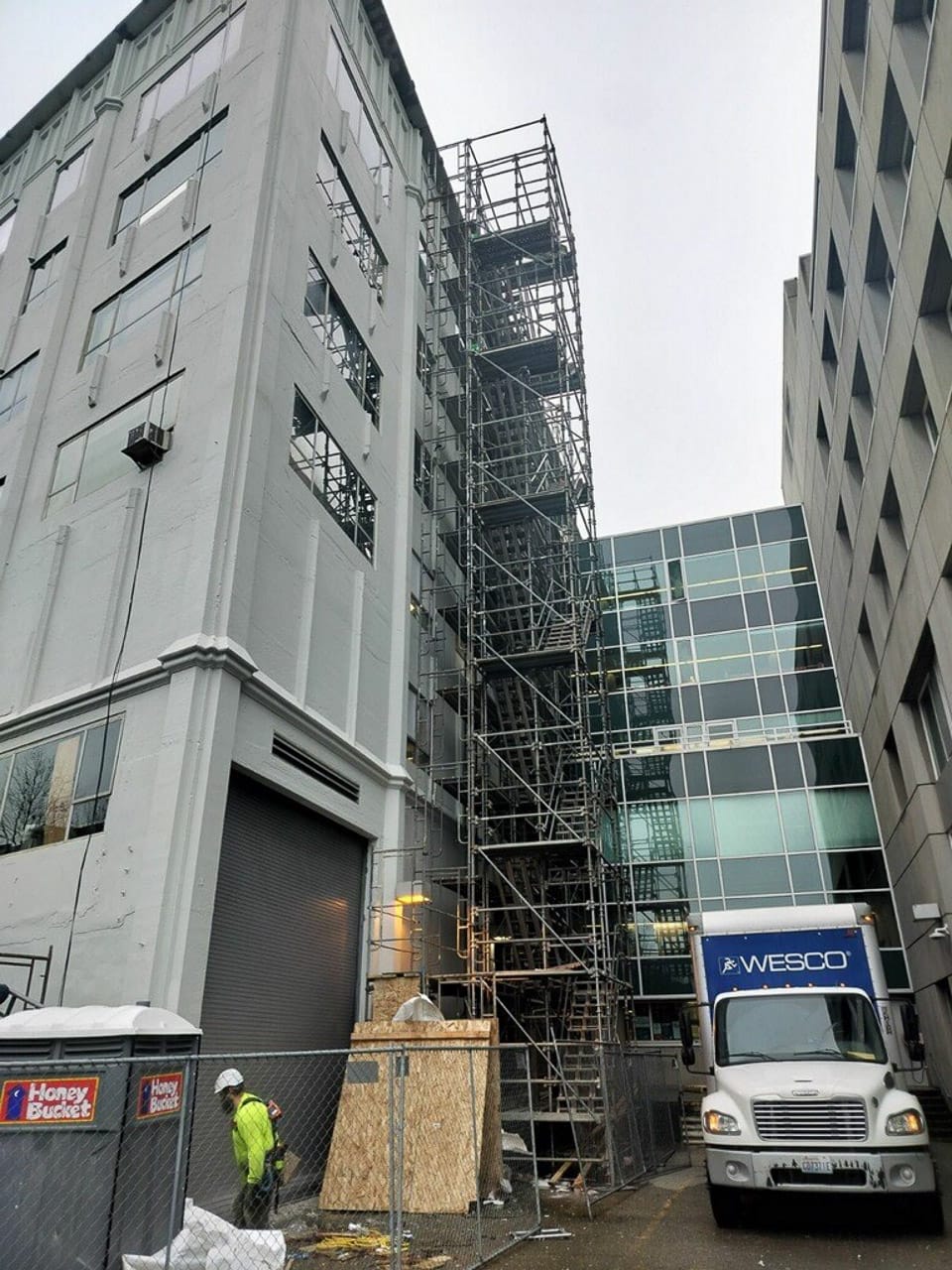
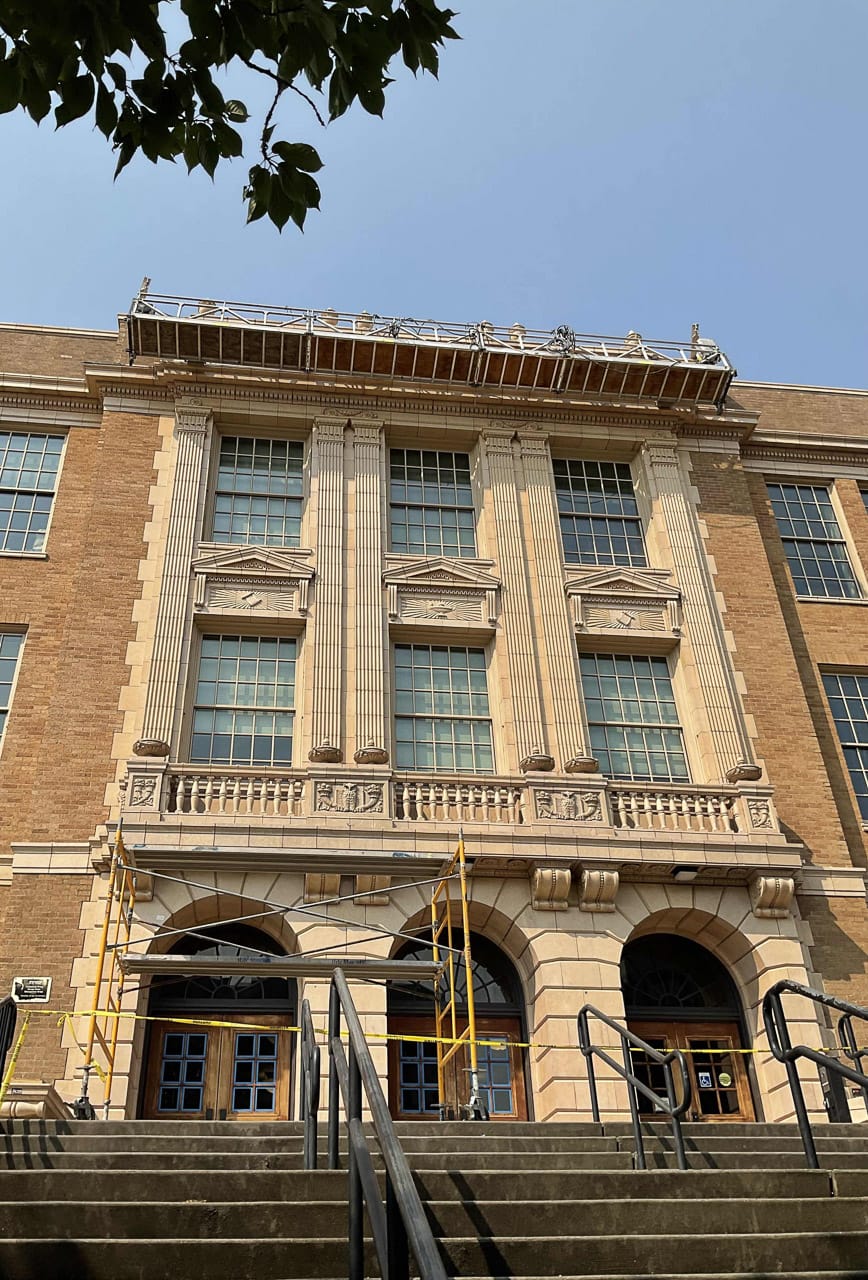
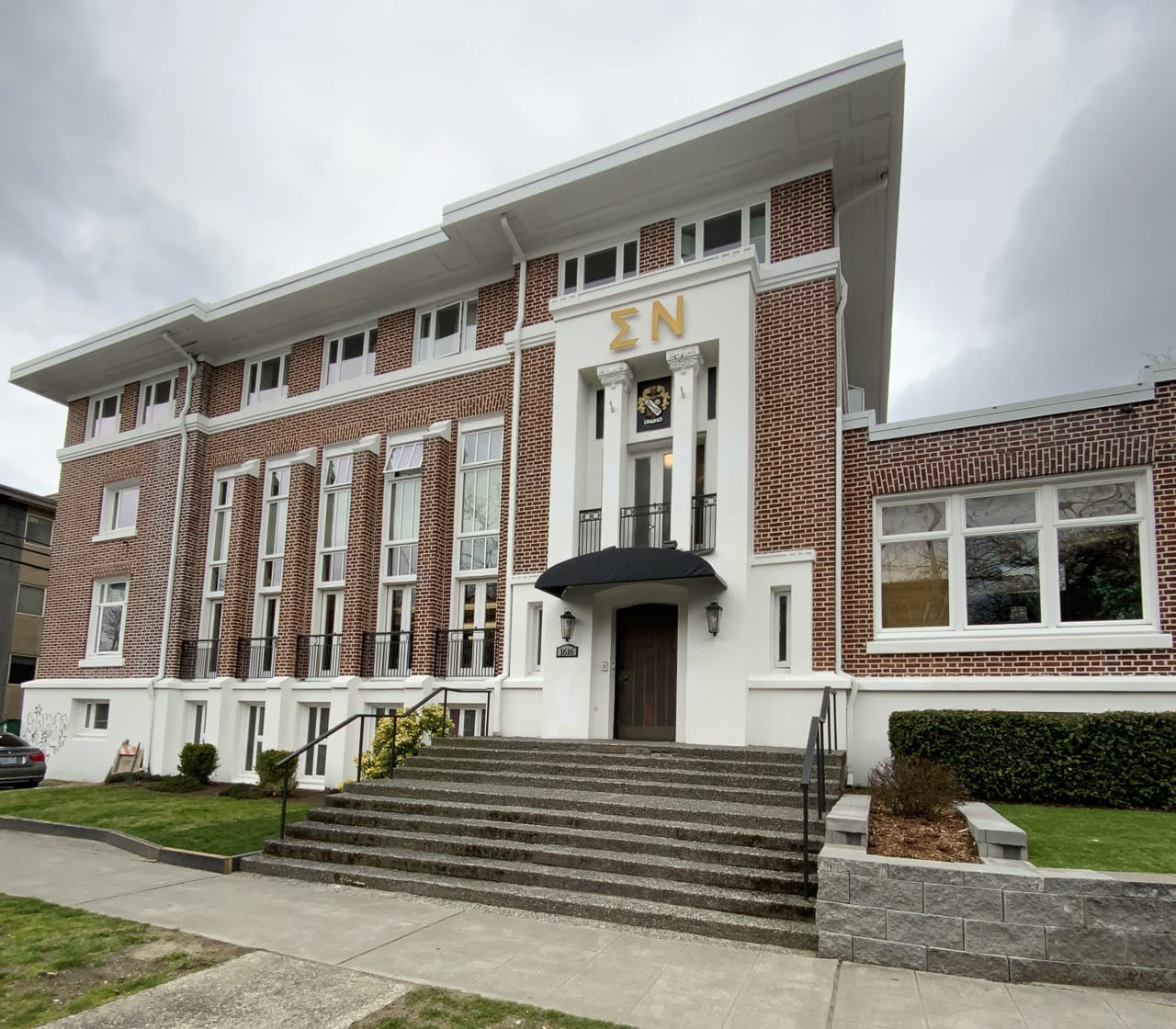
A sample of the institutional and campus buildings where we have completed waterproofing. Select any building to see the finished work.
Rife Masonry Advantages
Why Choose Rife For Masonry Waterproofing in Seattle
Track Record of Excellence
Our crews have waterproofed institutional and campus buildings across Seattle, including UW Henderson Hall and Roosevelt High School, where the masonry has to hold up to decades of use and weather.
Seamless Process
We repair joints and damaged brick before treatment, then plan access, staging, and elevation order around tenants and daily operations, so the building stays open while the work moves through it.
Elite Customer Experience
Commercial property is all we do. Every assessment gives you a ranked list of work with photos and cost estimates, ready to drop into a capital plan or an owner report.
Premium Materials
We apply penetrating, vapor-permeable repellents matched to each substrate, never paints or film-forming coatings on brick, so the masonry keeps its ability to dry.
Masonry Waterproofing Across Greater Seattle
Long wet seasons and older commercial brick are common across the region, and we bring the same assessment-first approach to masonry contracting in Redmond, masonry services in Everett, and masonry services in Bothell.
Related Blogs


Masonry Waterproofing FAQs
How long does masonry waterproofing last?
There is no single answer, because it varies by product, how sound and dry the masonry was at application, and how exposed each elevation is. Manufacturers publish reapplication intervals for their products. We pass along the published guidance for whatever we apply to your building, so the next treatment can be scheduled rather than guessed.
How do I prepare for masonry waterproofing?
Masonry preparation is our job. We repair damaged brick, stone, and mortar, clean the surfaces, and blend patched areas with a color correction stain where necessary. On your side, the main tasks are clearing access to each elevation and giving tenants notice of the schedule.
Will waterproofing change how our building looks?
Penetrating repellents absorb into the masonry instead of leaving a film, so they are designed not to alter the look of the wall the way a coating would. Some products and substrates can still show a slight difference, so we go over the expected finish with you before the full building is treated.
Can you waterproof an occupied commercial building?
Yes. The application is minimally invasive, so business tenants can keep operating while the work is underway. Access and the order of elevations are planned with building management before the crew mobilizes.
Is waterproofing the same as sealing or painting brick?
No. Paints and film-forming sealers cover the brick and stop water vapor from escaping, so moisture builds up behind the surface and damages the face. A penetrating repellent works inside the masonry, keeping rain out while allowing the wall to dry. For commercial brick, that ability to breathe is what separates protection from damage.
How much does commercial masonry waterproofing cost?
Cost is driven by the square footage of masonry, the amount of joint and brick repair needed beforehand, the product the substrate calls for, and the access equipment required to reach each elevation. A firm number follows a walkthrough of the property, which you can arrange at (206) 696-6998.
Schedule Your Masonry Waterproofing Assessment Today
Book a walkthrough before the next wet season. We will separate the walls that are ready for treatment from the ones that need repair, and give you pricing for both at no charge. Our office line is (206) 696-6998, and the contact form reaches the same team.